5G Beam Mobility Management | Intra-cell vs Inter-cell Beam Switching Explained (Article + Video)

Introduction
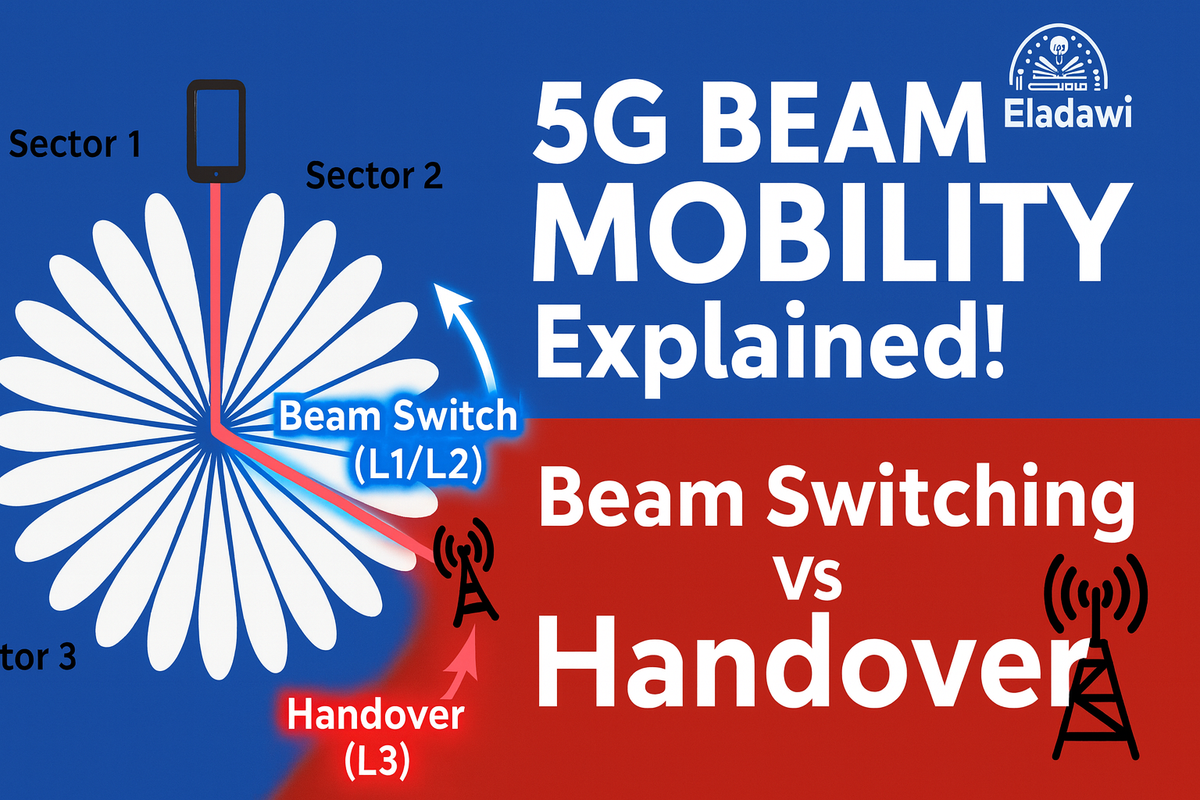
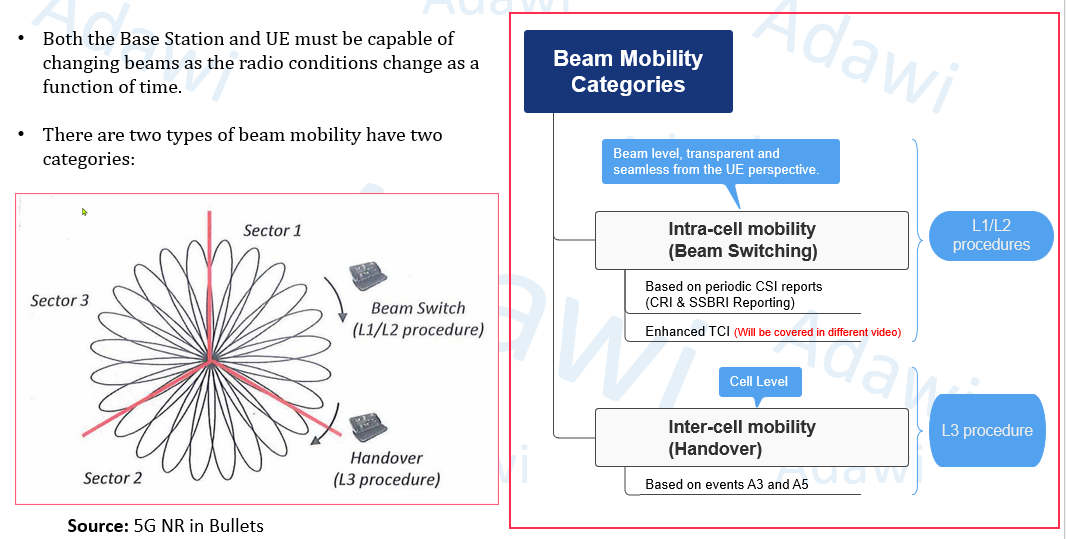
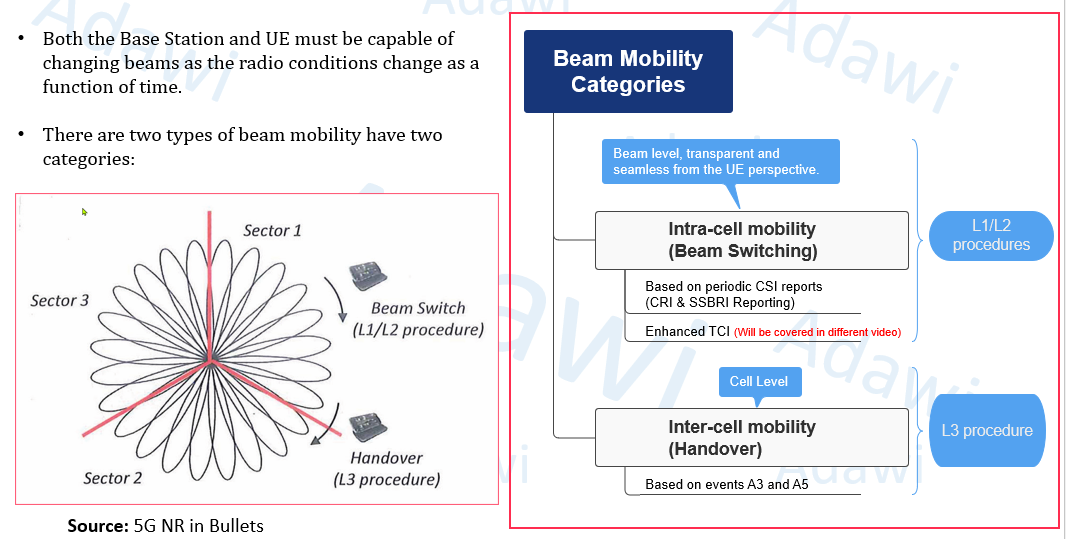
- Both the Base Station and UE must be capable of changing beams as the radio conditions change as a function of time.
- There are two types of beam mobility have two categories:
1- Intra-cell mobility:
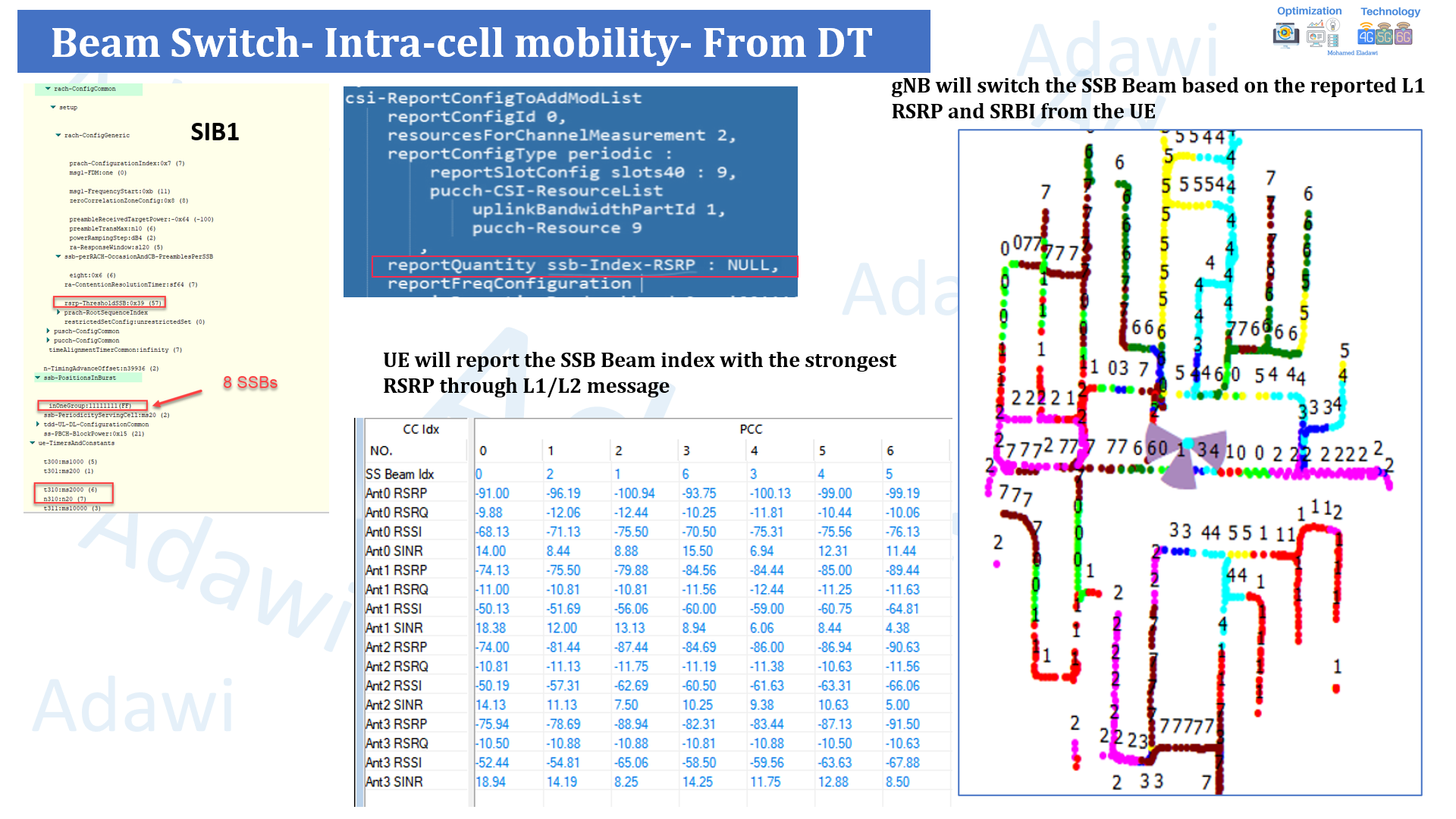
- Intra-cell mobility occurs when the serving beam of a UE is changed within the same sector, for example when switching between different SSB beams (e.g., among 8 supported SSBs) of the same cell.
- Under normal operating conditions. Beam Management procedures allow a UE to switch between beams as the radio conditions change over time, i.e. a UE which is moving around a cell can switch between beams by reporting a CSI Reference Signal Resource Indicator (CRI) or SS/PBCH Block Resource Indicator (SSBRI).
- These indicators provide the Base Station with information regarding the preferred beam at any point in time.
- Intra-cell beam switching can be both transparent and seamless from the UE perspective. Where:
- The UE can be instructed to generate periodic CSI reports with the report/Quantity set to ‘cri-RSRP’ if mobility is required between CSI Reference Signal beams,
- or with the reportQuantity set to ‘ssb-Index-RSRP’ if mobility is required between SS/PBCH beams.
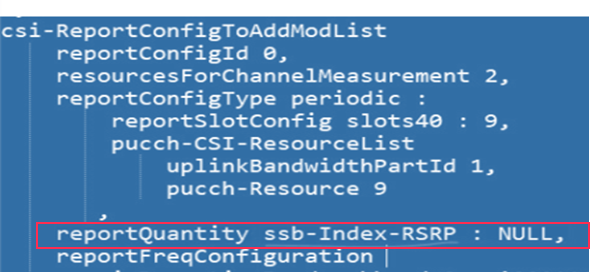
- The Base Station can use this information to switch between beams without informing the UE. This is done by changing the set of beamforming weights which are applied to the Resource Blocks allocated to the PDCCH and PDSCH.
- The UE continues to receive the downlink transmissions without knowing that the beamforming weights have been changed.
- i.e from the DT Logs: gNB will switch the SSB Beam based on the reported L1 RSRP and SRBI from the UE
- UE will report the SSB Beam index with the strongest RSRP through L1/L2 message
2- Inter-Cell Mobility
What Is Inter-Cell Mobility?
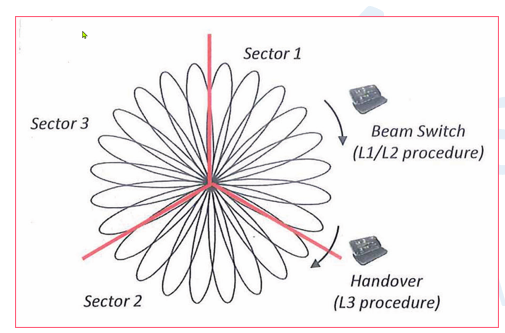
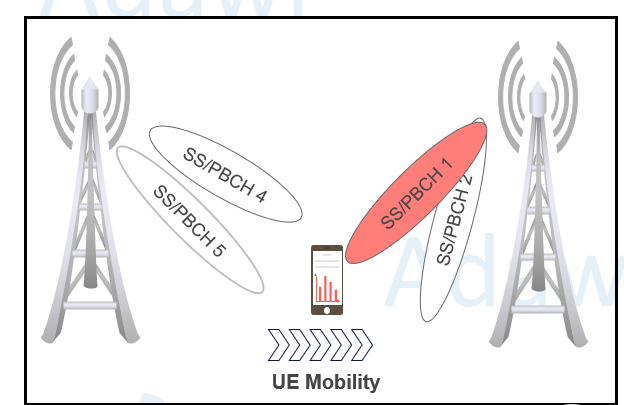
- Inter-cell mobility in 5G refers to the process where a UE moves from one cell (or sector/site) to another, and the network performs a handover to maintain service continuity.
- This typically happens when the user moves geographically, for example from one site to a neighboring site or from one sector to another. Unlike intra-cell mobility, which operates at the beam level, inter-cell mobility is a cell-level procedure and always involves Layer-3 (RRC) signaling.
How Inter-Cell Mobility Is Triggered
Inter-cell mobility is mainly triggered by measurement events, most commonly:
- Event A3 – a neighbor cell becomes better than the serving cell by a configured offset
- Event A5 – the serving cell becomes worse than a threshold while a neighbor cell becomes better than another threshold
When A3 or A5 events are triggered:
- The UE sends a measurement report
- RRC signaling is involved
- The gNB evaluates the report and decides whether to perform a handover
Cell-Level vs Beam-Level Measurements (Key Concept)
- A very important point is that inter-cell mobility relies on cell-level measurements, not beam-level measurements.
- Each cell may transmit multiple beams (for example, 8 SSB beams per cell).
While the UE measures all these beams, handover decisions are based on a single cell-level value, not individual beam values.
So the main question becomes: How does the UE calculate a single cell-level measurement from multiple SSB beams?
To calculate the cell-level measurement, the network can configure the UE with two key parameters:
1- Number of SSB Blocks to Average: nrofSS-BlocksToAverage
- Defines how many of the strongest SSB beams should be used
- Example: if set to 3, the UE averages the 3 strongest beams that exceed the threshold
2- Absolute Threshold for SSB Blocks (absThreshSS-BlocksConsolidation)
- Defines a minimum RSRP level
- Only SSB beams above this threshold are considered for averaging
absThreshSS-BlocksConsolidation.Example 1: Both parameters are satisfied. The UE selects the three strongest SSB beams that exceed the ABS threshold and calculates the cell-level measurement as a linear average of these three beams.”
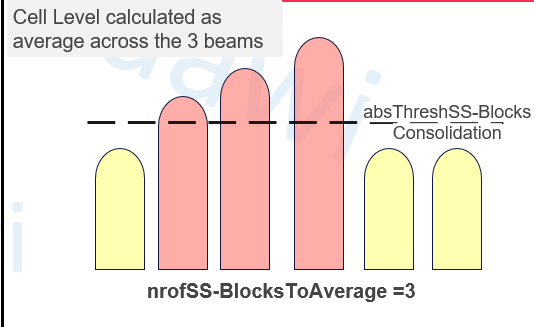
Example 2: Although nrofSS-BlocksToAverage = 3 is configured, none of the SSB beams exceeds the ABS threshold. As a result, the UE uses the strongest beam-level measurement as the cell-level result.
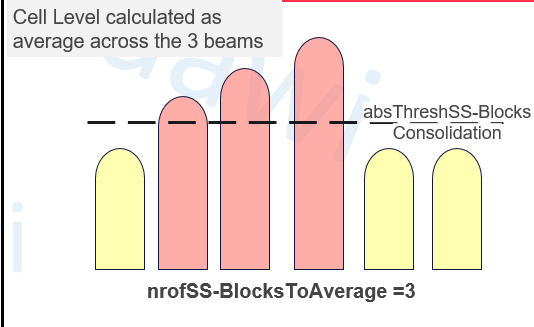
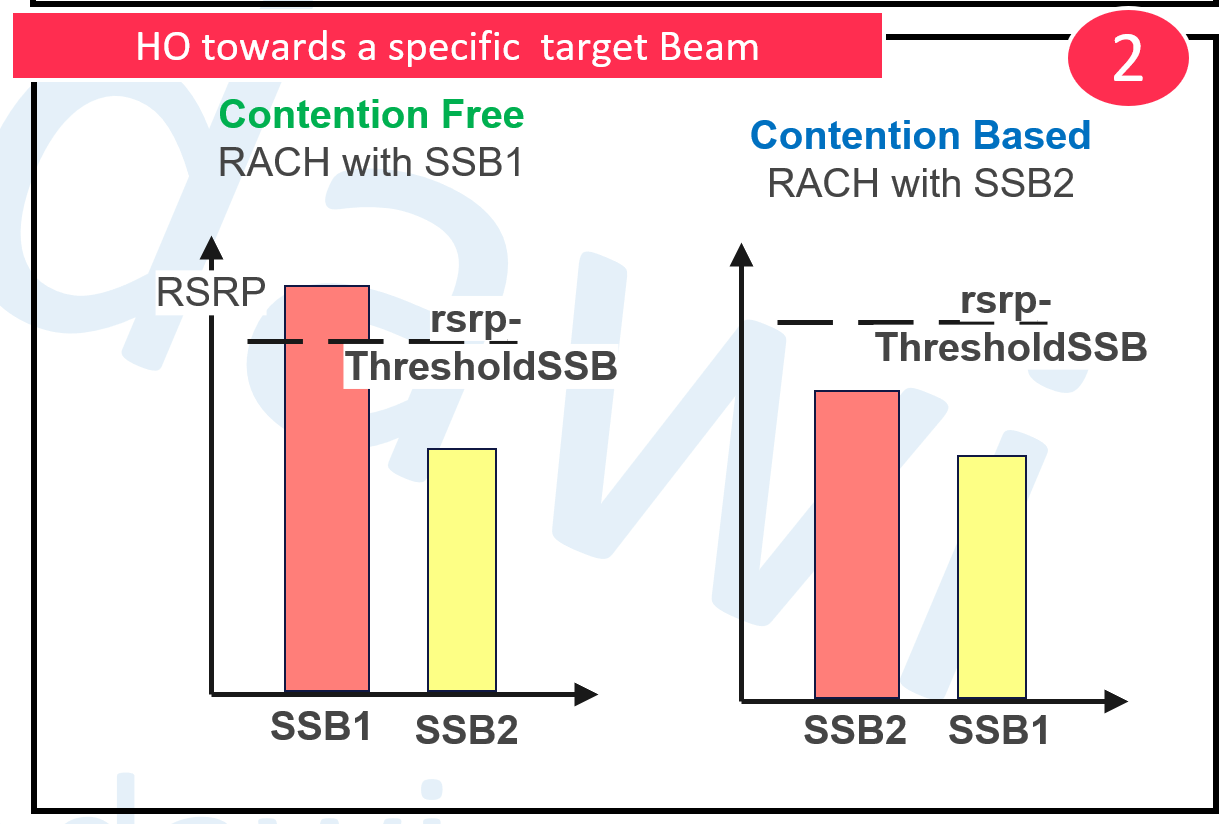
After the best cell is selected, how the UE will identify the best beam to be used. "Reporting the Best Beam for Handover Execution"
- In addition to cell-level measurements, the UE must also report, Which SSB beam is the strongest in the target cell
- This information is essential because the handover execution phase depends on beam-specific random access procedures as during handover execution, the UE can use either:
- Contention-Free Random Access (CFRA) – lower latency, higher reliability
- Contention-Based Random Access (CBRA) – higher collision risk
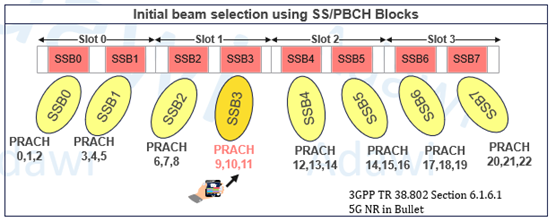
- The Decision Parameter is configured via RACH configuration and is called RSRP Threshold SSB (rsrp-ThresholdSSB), this parameter determines whether any SSB beam is strong enough to allow contention-free access, for example:
- If the threshold is met: UE uses dedicated PRACH preambles (Contention-free random access is use), where each SSB beam is mapped to specific preamble indices..
- If the threshold is not met: Contention-based random access is used.
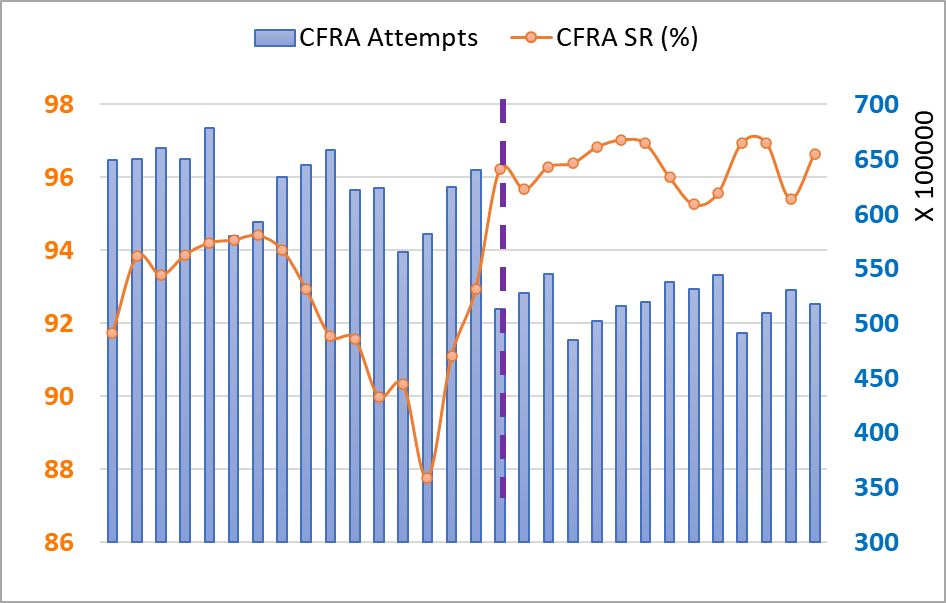
KPIs Impact after tuning rsrp-ThresholdSSB parameter:
- Contention based RACH SR Improved.
- Contention free RACH SR Improved.
- BLER & Quality KPI’s improved%.
|
Parameter |
Value |
|
rsrp-ThresholdSSB |
0 to 127 |