Session 3: 5G E2E User Plane Explained: TCP Data Flow Basics

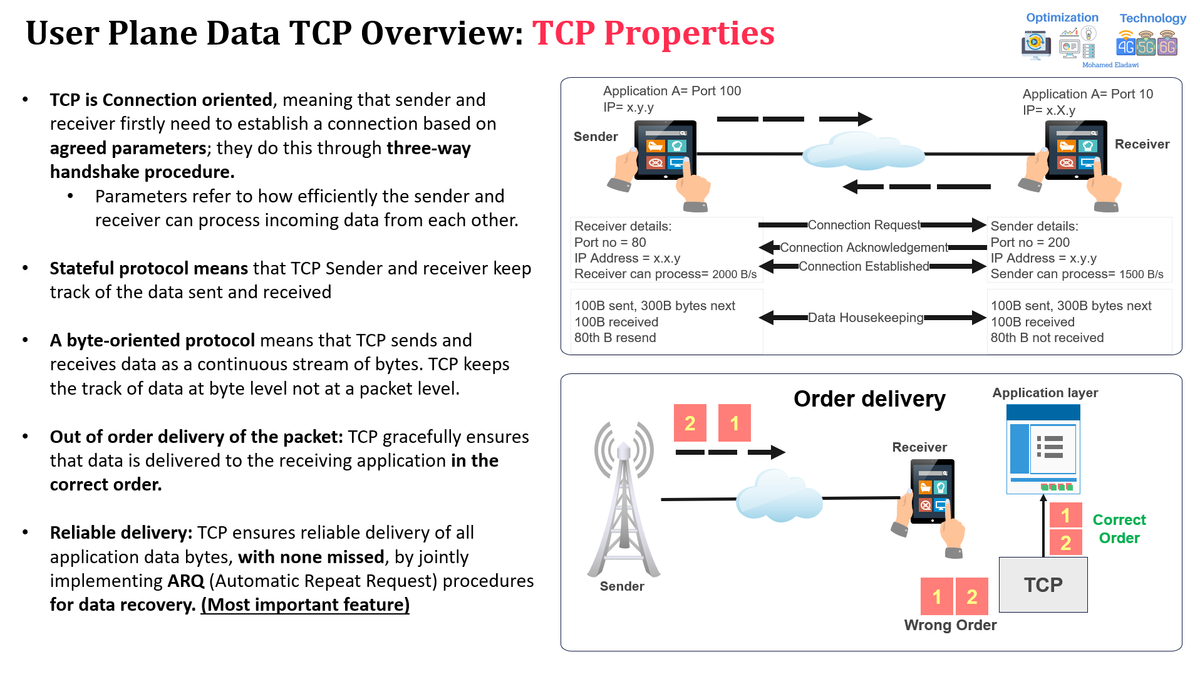
Session 3 of the E2E User Plane and RAN Protocol series is now uploaded. This video provides a detailed look at the E2E User Plane and RAN protocols, focusing on TCP and its interaction with PDCP, the TCP handshake process, and various retransmission mechanisms.
Topics Covered:
- User Plane Data TCP/UDP Overview
- TCP Properties
- TCP Handshake/Header Overview
- Wireshark TCP Handshake/Header Analysis
- TCP Segments and Sequence Numbers
- TCP Segment Types
- TCP Retransmission Time-Based (RTO)
- Wireshark Analysis of Retransmission Time-Based (RTO)
- TCP Fast Retransmission (Duplicate ACK)
- TCP Fast Retransmission (Selective ACK)
- Wireshark Analysis of TCP Fast Retransmission (Selective ACK)
- PDCP vs. TCP (Out-of-Order Delivery)
Fee Video:
Paid Material
This topic is also available as a paid PDF material.
Title: 5G E2E User Plane Training - TCP Complete Guide
Price: €5.00
Paid PDF material covering TCP concepts and behavior in the 5G end-to-end user plane.
Status: Checkout link will be activated soon.
For support and policies: