5G Massive MIMO Fundamentals: Passive vs Active Antenna, MIMO Gains, and Antenna Specifications and Structure - Article

Introduction
5G Massive MIMO is one of the most important topics to understand before going deeper into NR beamforming, beam management, CSI-RS, SRS, layers, ports, and MU-MIMO.
This article explains why Massive MIMO is different from traditional MIMO, how the antenna structure changes, where the main gains come from, and why this matters in real wireless network design and optimization.
Content
This article will cover:
Section 1
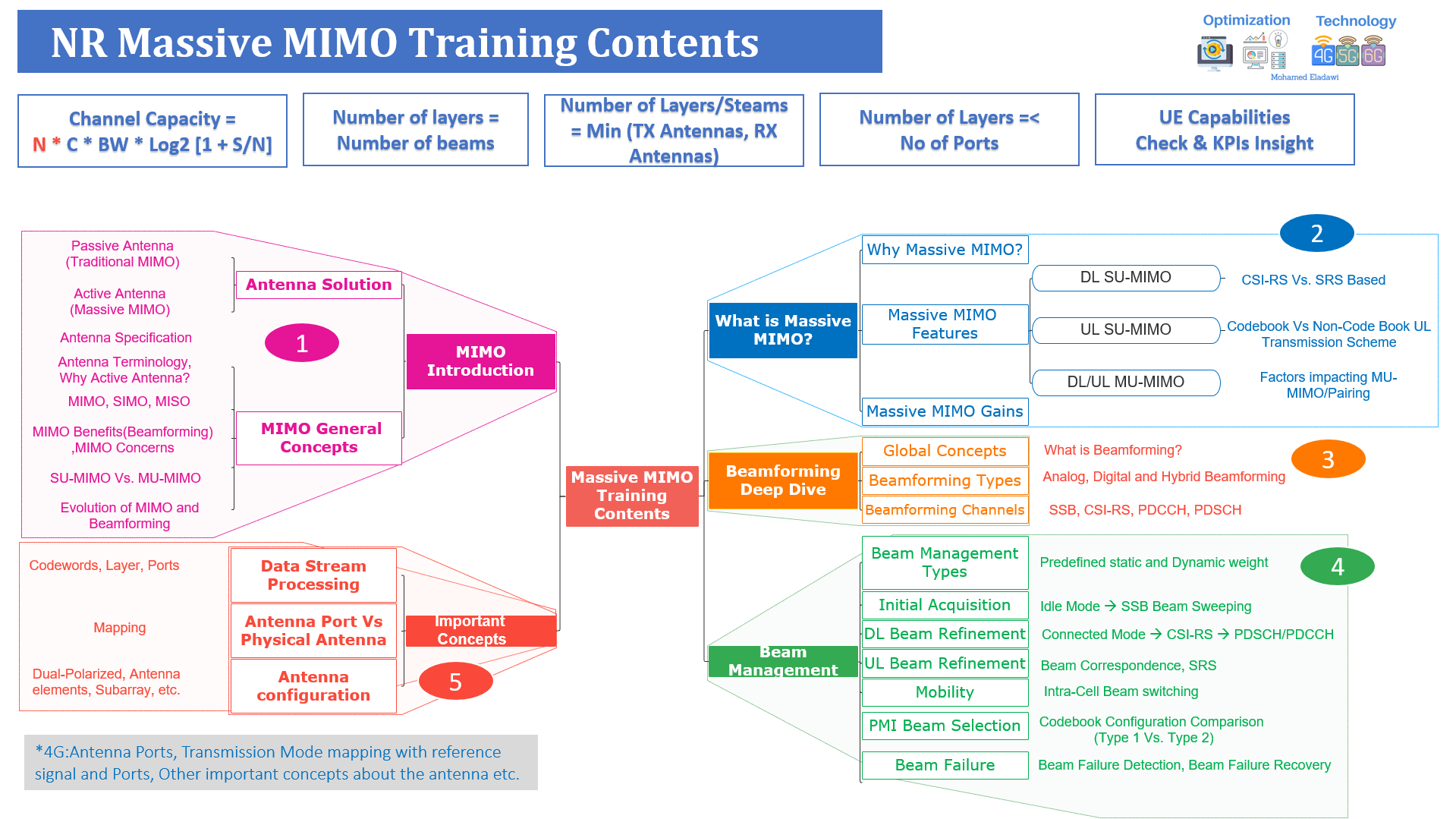
What 5G Massive MIMO really means at a high level
- 5G Massive MIMO is an active antenna solution that uses a much larger number of antenna elements than traditional MIMO.
- Instead of treating the antenna and radio unit as separate blocks, Massive MIMO integrates them into one active unit. This gives better control over how energy is transmitted, improves directivity, and enables more advanced beamforming.
- At a high level, Massive MIMO is not only about “more antennas.” It is about using more antenna elements in a smarter way to improve coverage, quality, and capacity.
Section 2
What is the primary function of 5G Massive MIMO
- Focus RF energy more efficiently toward the user through better beamforming
- Improve coverage and signal quality through higher gain and better directivity
- Increase capacity through spatial multiplexing and better MU-MIMO efficiency
- Provide control in both horizontal and vertical dimensions, not only one plane
Section 3
Detailed technical breakdown
3.1 Passive vs active antenna solutions
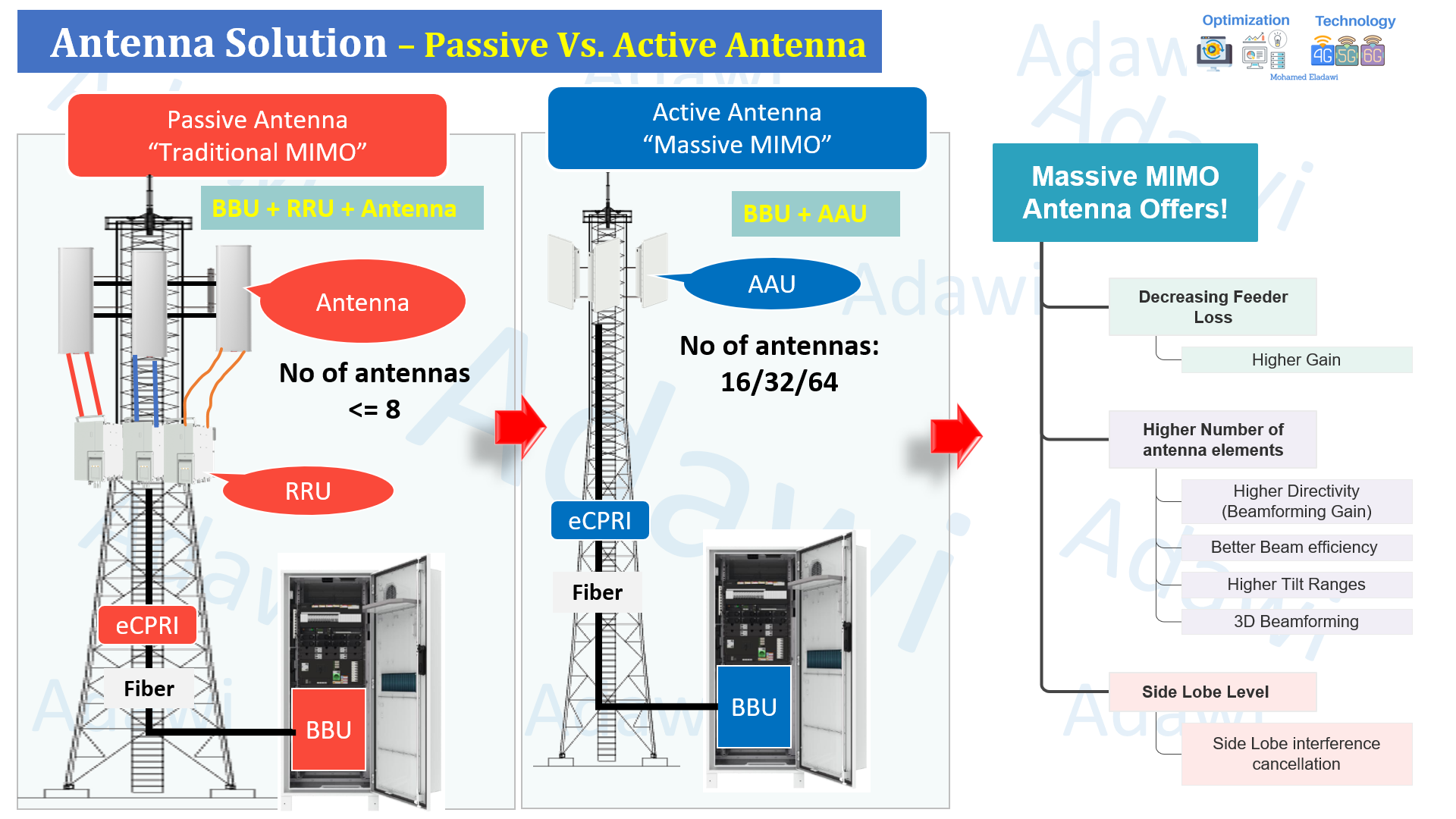
- Traditional MIMO usually uses a passive antenna solution. In that setup, the RRU and the antenna are separate, and the antenna side is typically limited to lower antenna counts such as up to 8T8R.
- Massive MIMO uses an active antenna solution. Here, the radio and antenna are integrated into one unit, often called an AAU. This setup is commonly associated with 16, 32, or 64 transmit/receive paths.
- The practical impact is important:
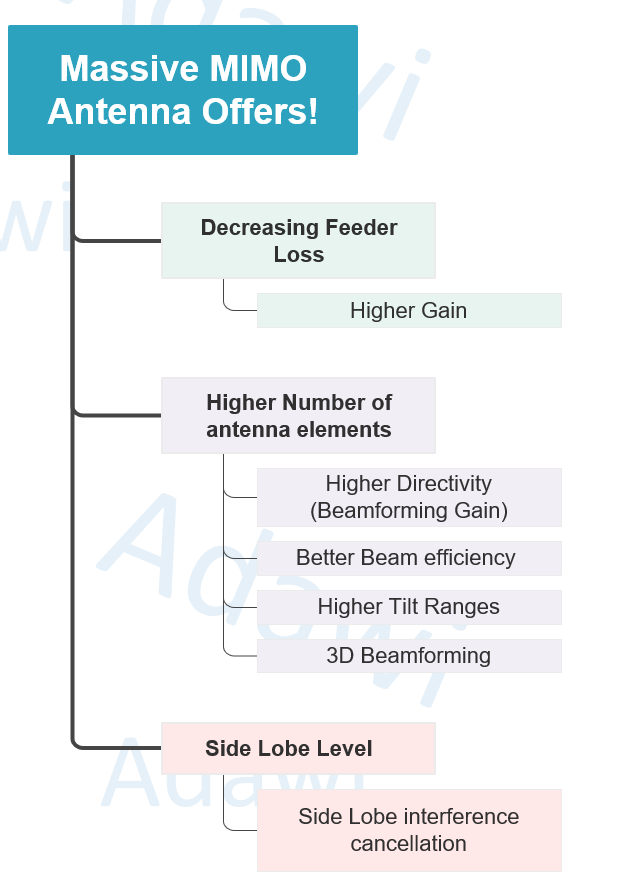
- Lower feeder loss
- Higher antenna gain
- Higher number of antenna elements
- Better directivity
- Better beam efficiency
- Higher tilt control range
- Support for 3D or 2D beamforming in both horizontal and vertical domains
3.2 Antenna specifications, propagation, and terminology
- Before understanding Massive MIMO gains, it is important to understand how antennas are described.
- Some of the most important antenna specifications covered in this article are:
- Frequency range
- Antenna gain
- Front-to-back ratio
- Side lobe level
- Polarization
- Number of antennas / TRX
- Number of antenna elements
- Horizontal beam sweeping range
- Vertical beam sweeping range
- Beam efficiency
Antenna Specifications:
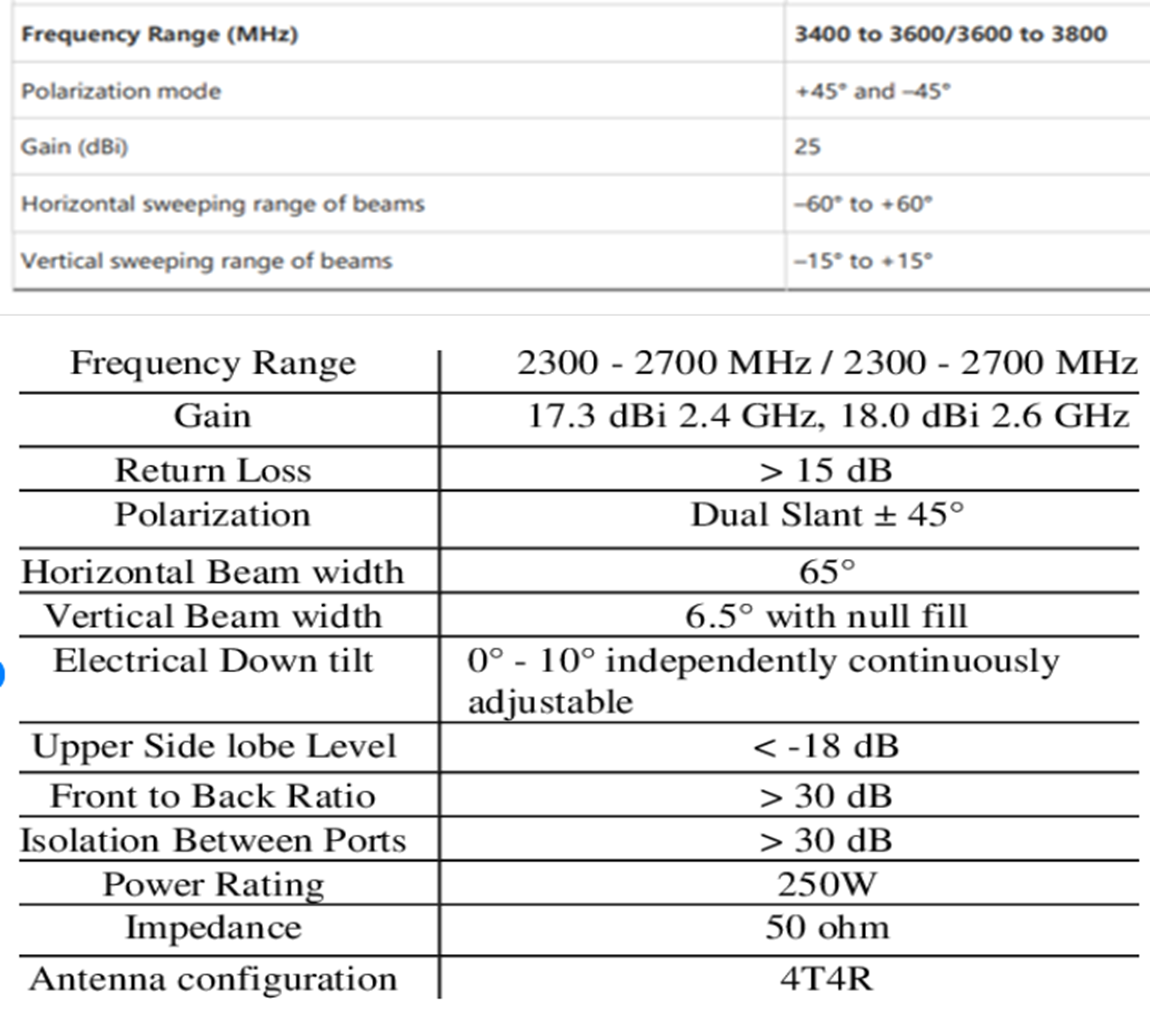
Now, let’s go into a deeper explanation of each part of the antenna specifications.
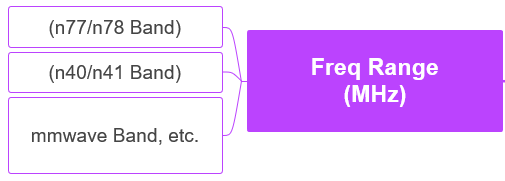
Frequency range tells you which operating bands the antenna supports. This can include mid-band ranges such as n77/n78 or n40/n41, and in some cases mmWave ranges as well. This is a basic but critical parameter because the antenna must physically support the target band before any Massive MIMO gain can be achieved.

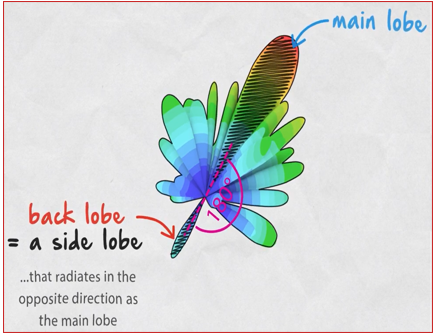
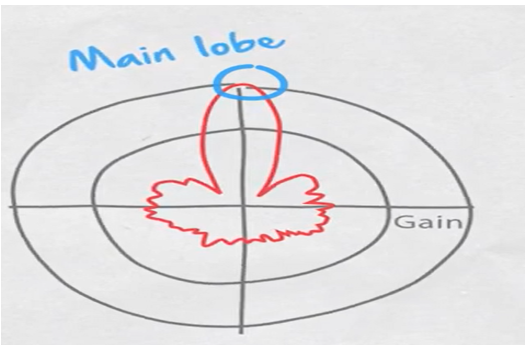
Front-to-back ratio shows the ratio between the antenna directivity in the main serving direction and its directivity in the backward direction. In simple words, it tells you how much unwanted radiation exists behind the antenna. A better front-to-back ratio usually means less back-side interference.

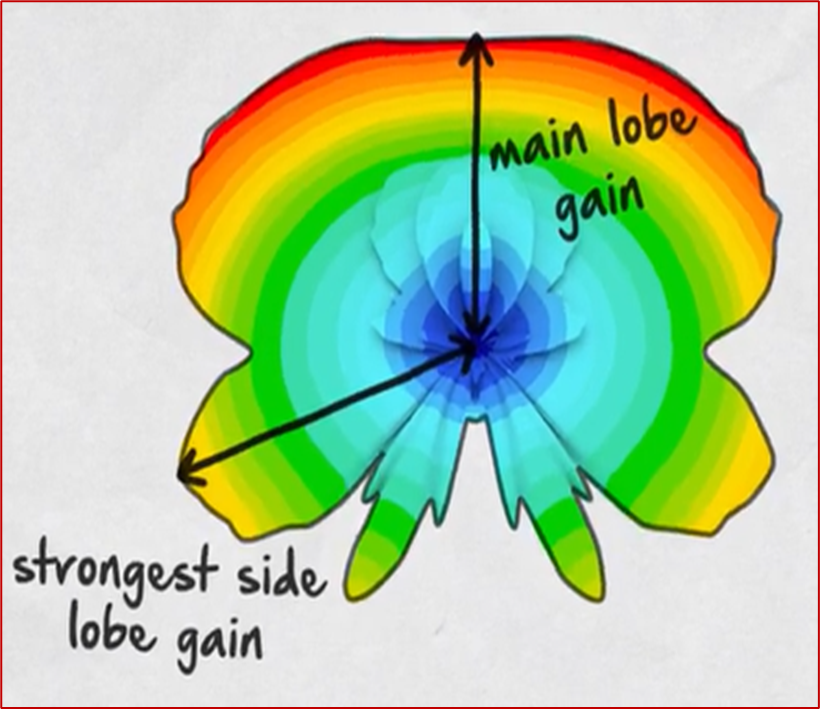
Side lobe level describes the unwanted radiation outside the main beam. Strong side lobes are not useful for the intended UE and can create extra interference to neighboring users or cells. Lower side lobes usually mean cleaner radiation behavior and better beam control.

Number of antennas / TRX paths shows how many transmit and receive branches are available, such as 4T4R, 8T8R, 16T16R, 32T32R, or 64T64R. In practice, a higher TRX count usually gives better spatial processing capability, stronger beamforming flexibility, and higher MIMO potential.

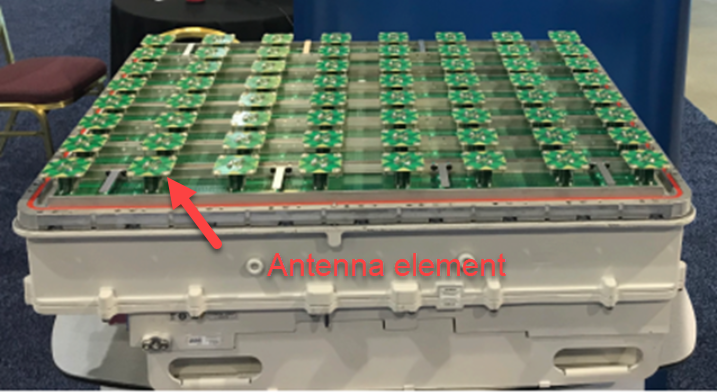
Antenna elements are the small building blocks inside the full antenna array. In general, increasing the number of antenna elements helps improve gain, directivity, beam efficiency, and tilt-control flexibility. This is one of the main reasons why active antennas provide much stronger Massive MIMO capability than traditional passive antennas.
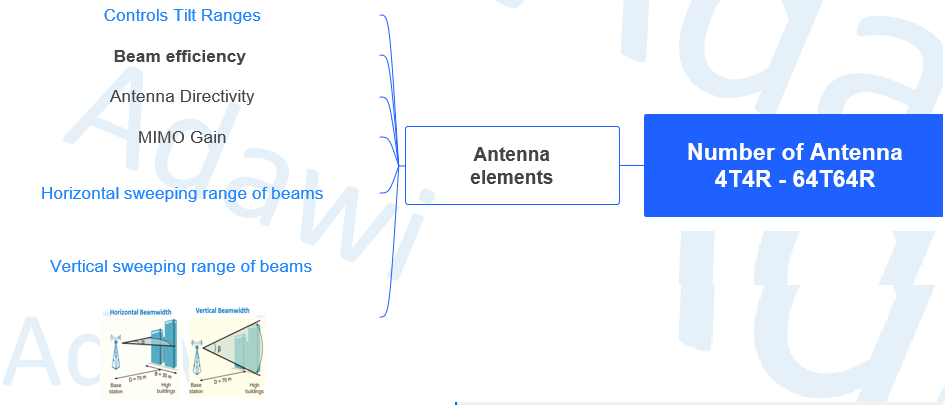
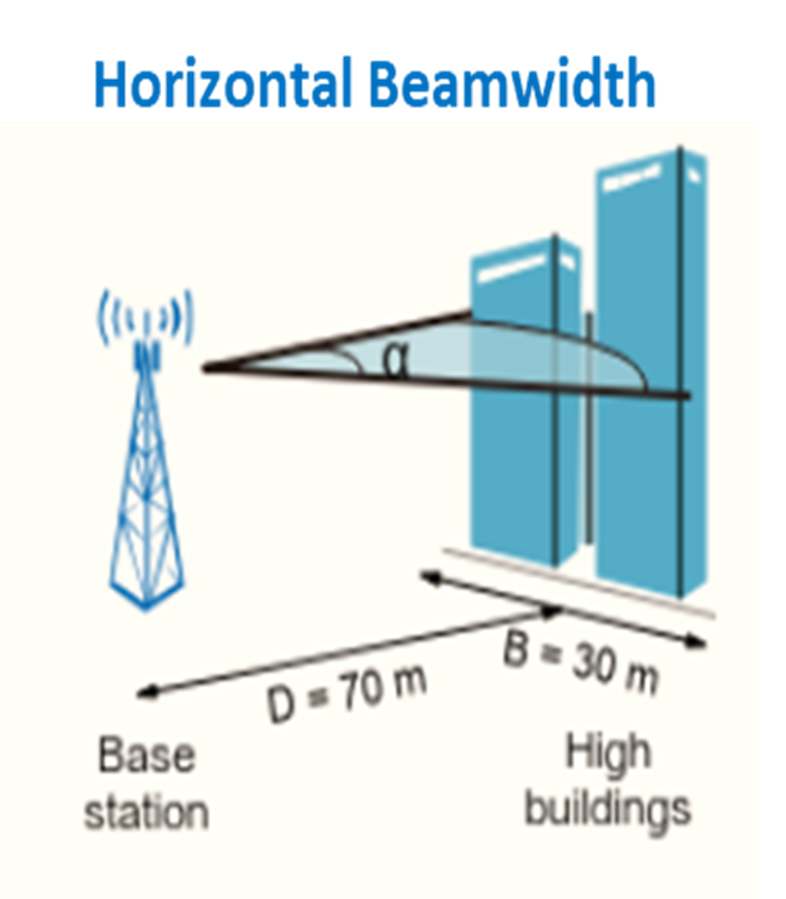
Horizontal sweeping range of beams shows how far the beam can be steered left and right across the sector. This matters when users are distributed across different azimuth directions and the network needs to guide RF energy toward different UE locations instead of keeping one fixed beam direction.
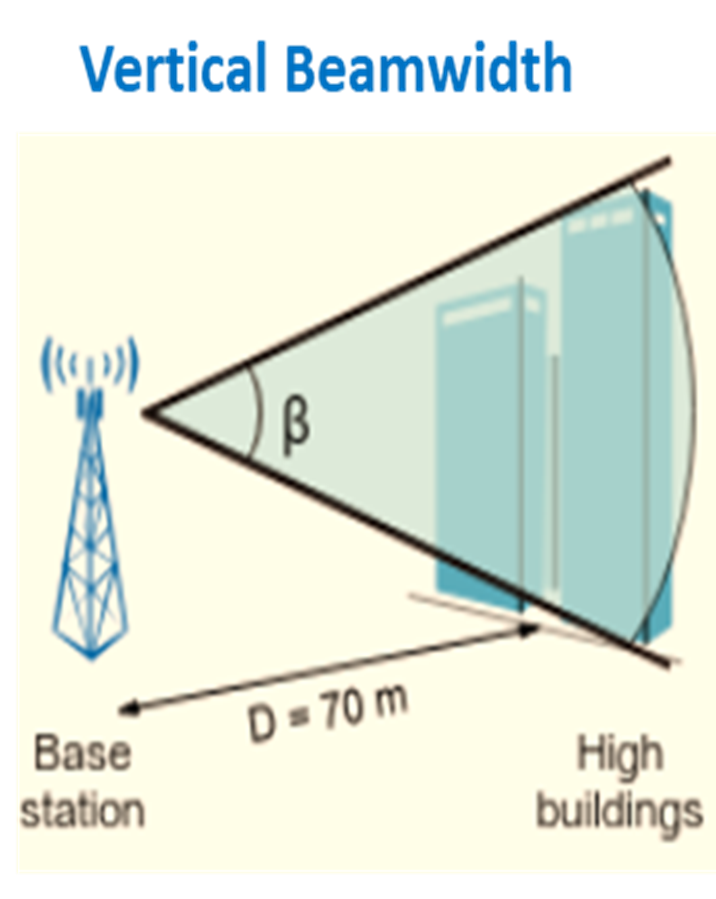
Vertical sweeping range of beams shows how far the beam can move up and down in elevation. This is important for tilt optimization, different site heights, varying user distances, and scenarios where better elevation control is needed. This is also one of the major strengths of active antenna systems.
Beam efficiency tells you what portion of the total radiated power is concentrated in the main lobe. In other words, it reflects how much of the antenna power is useful and how much is wasted in side or back lobes. Higher beam efficiency usually means better suppression of noise and unwanted interference.
Maximum transmit power is also part of the active antenna specifications. At a high level, it tells you the upper RF output capability of the unit. It should not be read alone, because the final performance also depends on antenna gain, number of elements, beamforming capability, and the overall antenna design.
Antenna gain tells you how strongly the antenna can focus RF energy in a certain direction. Front-to-back ratio shows how much unwanted energy appears in the backward direction. Side lobe level matters because strong side lobes can create unwanted interference.
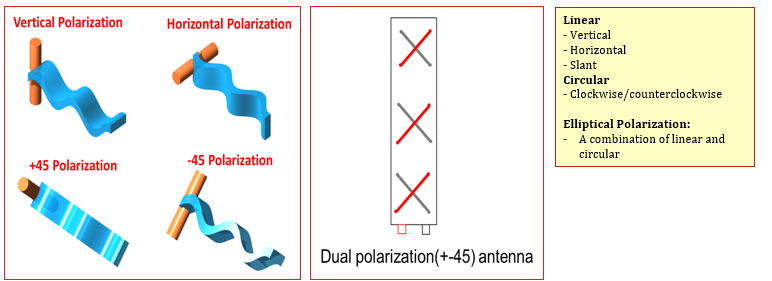
Polarization is also very important. There are multiple types of polarization including linear (vertical, horizontal, and slant), circular (clockwise and counterclockwise) which is usually used by the mobile device and the elliptical polarization. The slant (Dual) polarization, is widely used in both passive and active antennas because it enables more effective transmission and reception of signal components under real-world propagation conditions.
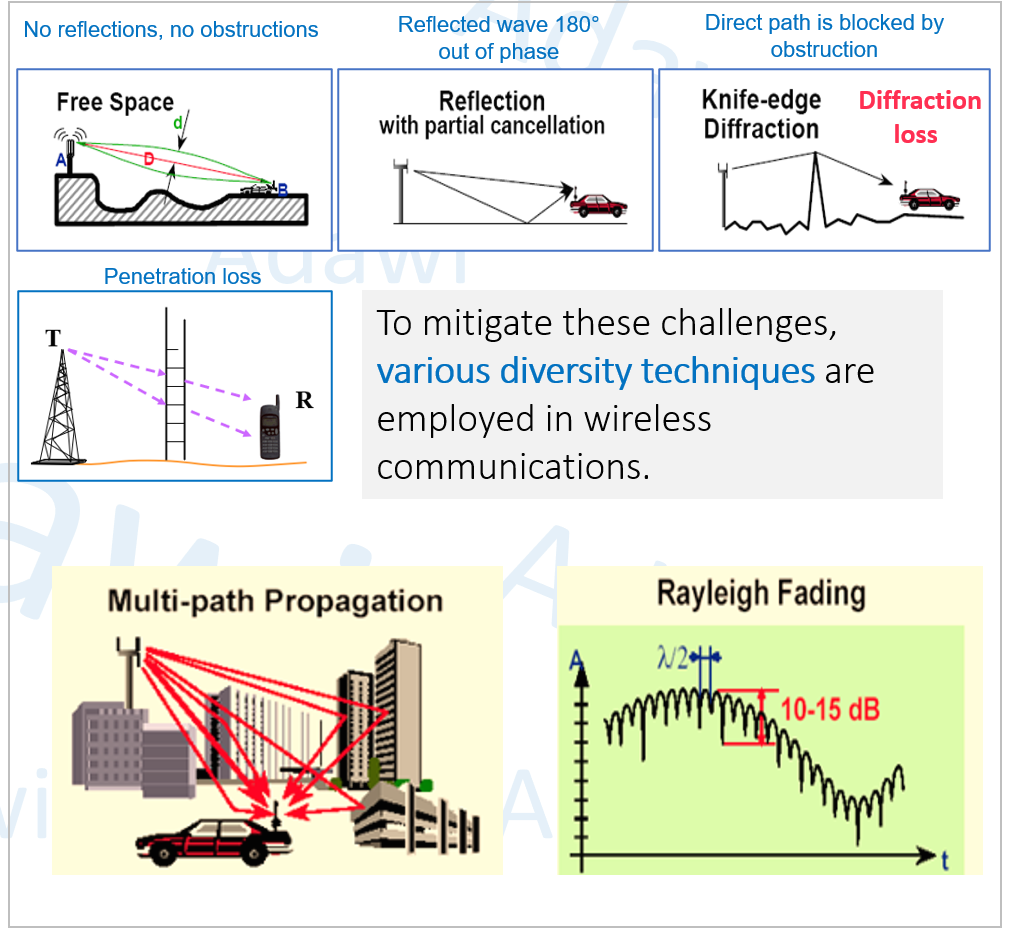
Propagation is the reason all of this matters. In real life, radio signals face attenuation, reflection, diffraction, penetration loss, and multipath fading. MIMO techniques are used to reduce the impact of these propagation problems.
3.3 Antenna terminology: how the full Massive MIMO antenna is built
- To understand Massive MIMO, do not start by looking at the whole antenna panel at once. Start from the smallest piece, then build the full picture step by step. That makes the structure much easier to understand.
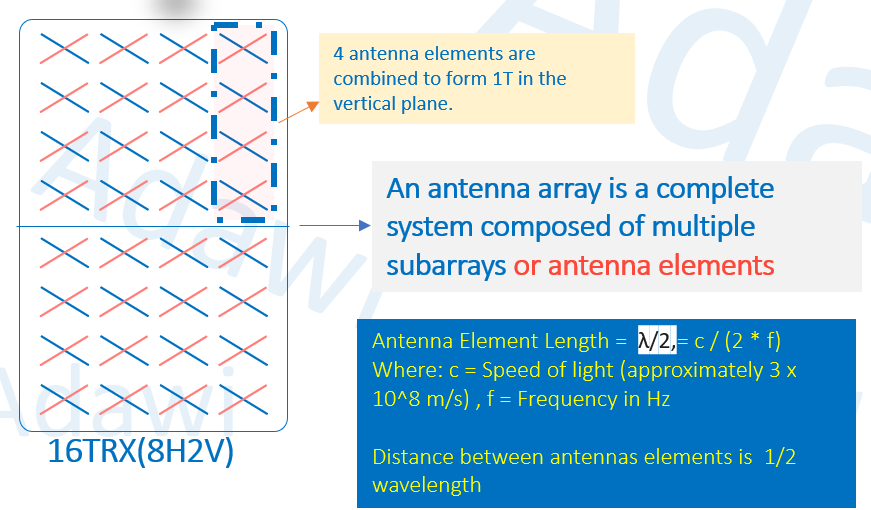
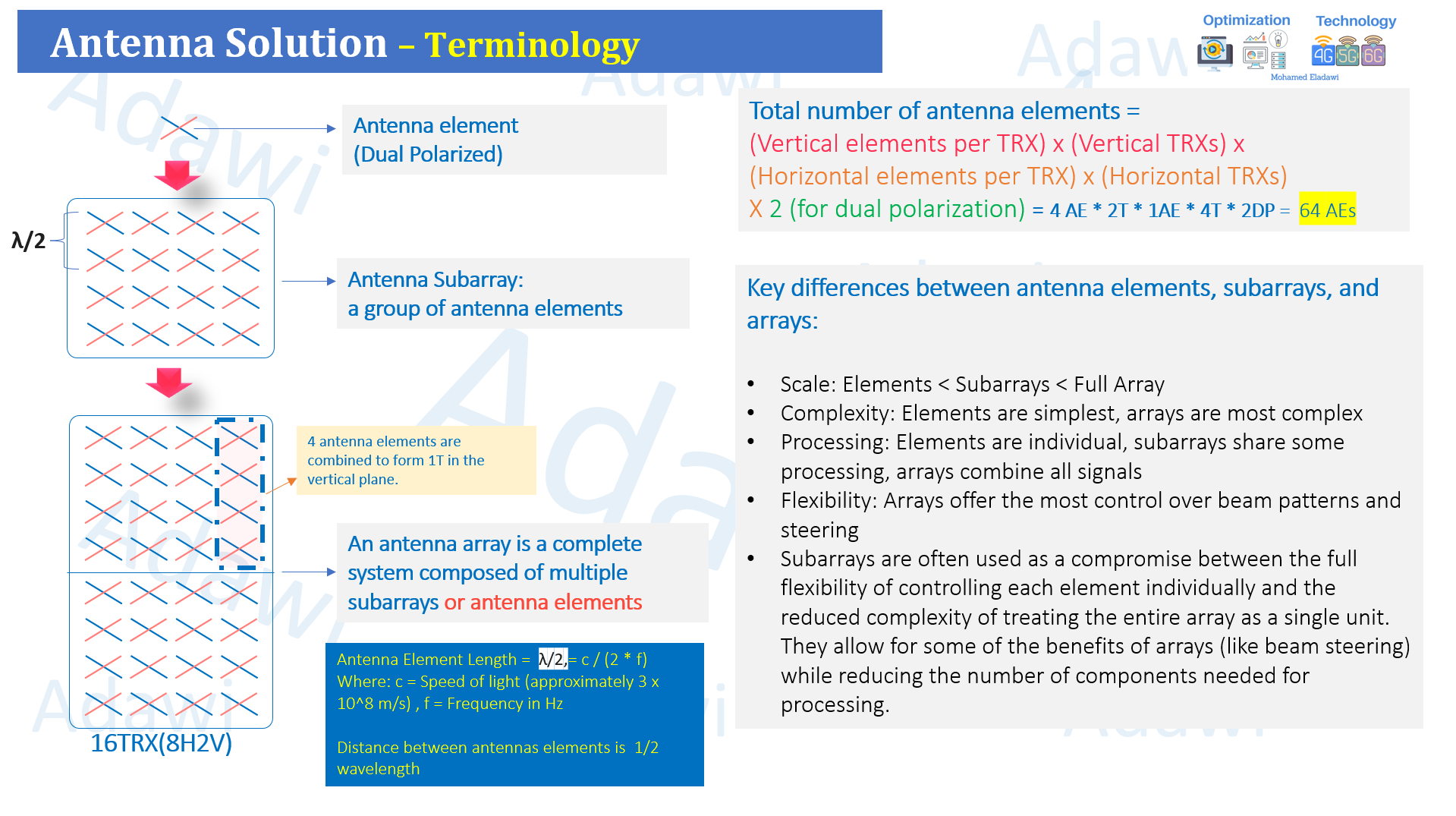
- The antenna element is the smallest building block. In this article, it is shown as a dual-polarized element, which means the same physical location supports two polarizations. This is the most basic unit that can transmit and receive electromagnetic waves. In simple words, this is the “smallest brick” inside the full antenna.

- The next level is the antenna subarray. A subarray is simply a group of antenna elements combined together. Instead of controlling every single element fully independently, the antenna groups several elements into a smaller block. This gives a practical balance: more beam control than a single element, but less complexity than treating the whole panel as one flat list of individual elements.
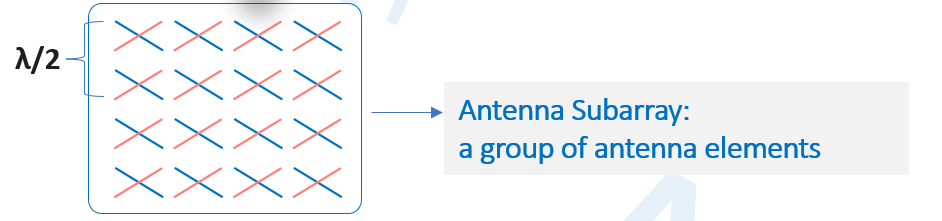
- Then comes the antenna array, which is the full antenna system. The array is made of multiple subarrays or multiple antenna elements arranged together to create the final antenna panel. This is the level where the network starts to gain stronger control over beam shaping and steering. In simple words: elements build subarrays, and subarrays build the full array.
- A simple way to visualize it is like this:
- Element = one small building block
- Subarray = a small group of building blocks
- Array = the full antenna panel made of many grouped blocks
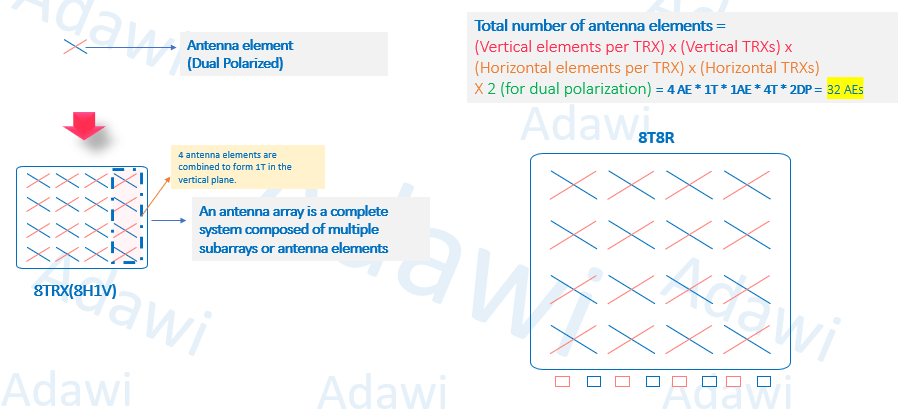
- Now let us connect this to the 16TRX (8H2V) example shown in the below picture. The idea here is that the antenna is arranged with 8 horizontal branches and 2 vertical branches. The slide also shows that 4 antenna elements are combined to form 1T in the vertical plane. Because the antenna element is dual-polarized, the total number of physical antenna elements is multiplied by 2 for polarization.
- The total number of antenna elements can be calculated as:
(Vertical elements per TRX) × (Vertical TRXs) × (Horizontal elements per TRX) × (Horizontal TRXs) × 2
which in this example becomes:
4 × 2 × 1 × 4 × 2 = 64 antenna elements. - This is where the story becomes important from a performance point of view. When the antenna is split into more than one vertical plane, the system gains extra control in the vertical dimension. This is one of the reasons why the 16TRX example can offer better tuning in the vertical direction, unlike simpler structures that mainly behave as one vertical plane only. This is one of the foundations of better 2D beamforming.
- In other words, the benefit is not only “more antennas.” The real gain comes from how those elements are organized. More elements and better grouping mean:
- better control over the beam shape
- better directivity
- better beam efficiency
- better tuning in both horizontal and vertical directions
- This is why antenna terminology matters. It explains where the Massive MIMO gain is physically coming from.
- It`s also important to highlight another important detail: the antenna elements are typically spaced by half a wavelength (λ/2), and the element length is also shown using the same λ/2 concept.
- This spacing is linked to better diversity behavior because the elements are separated enough to experience slightly different channel conditions.
Section 4
Traditional MIMO types and gain: the foundation before Massive MIMO
- It is important to understand a simpler point first: why do we use multiple antennas at all?
- The answer starts with the propagation channel. In real wireless communication, the signal does not travel in one clean straight line.
- It suffers from attenuation, reflections, blockage, multipath, and fading. Because of that, one transmit antenna and one receive antenna are often not enough to get the best coverage, quality, or throughput.
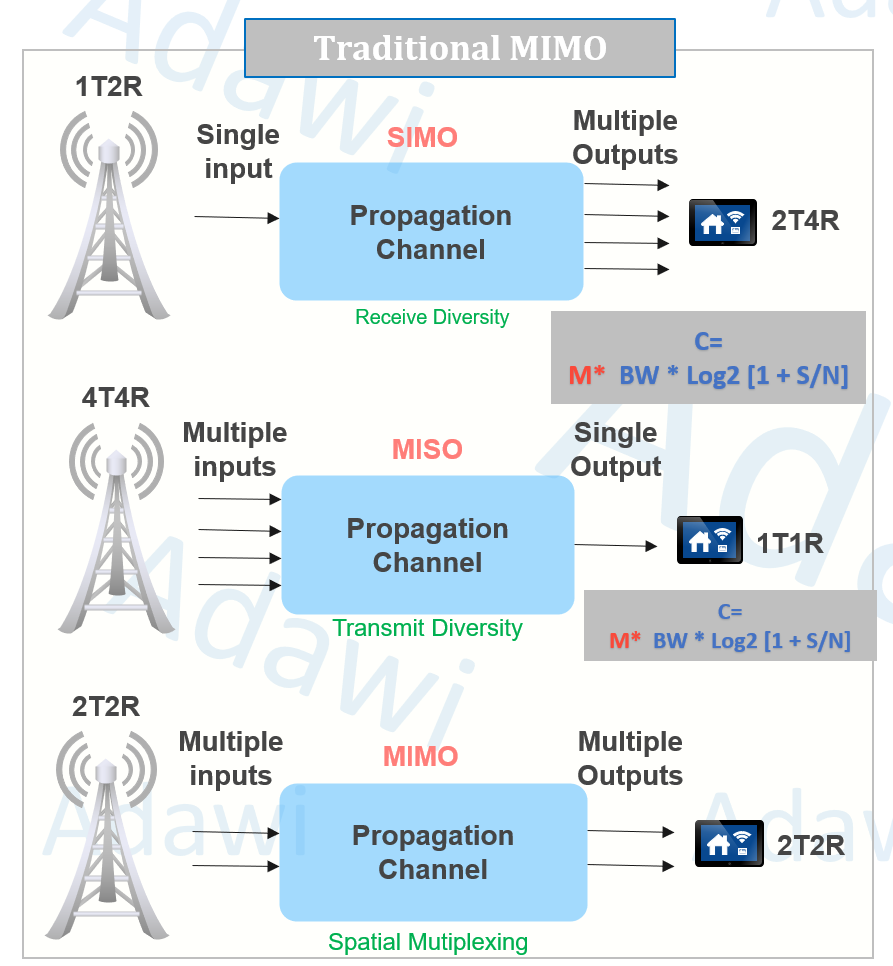
- That`s why it is important to understand the basic MIMO types first. This article starts with a high-level view of SIMO, MISO, and MIMO, then links them to the main gains: diversity gain, array gain, beamforming, and spatial multiplexing. Each one gives a different type of gain.
- SIMO = Single Input, Multiple Output
- MISO = Multiple Input, Single Output
- MIMO = Multiple Input, Multiple Output
- These are not new concepts introduced only by 5G. They already existed in traditional MIMO. The key message is that Massive MIMO keeps these same ideas, but with much better efficiency because it has many more antenna elements and much more beam control.
The big picture: what gains are we trying to get?
The below explains that multiple antennas can improve performance in several ways:
- Diversity gain helps reduce the impact of fading
- Array gain improves directivity by combining energy from multiple antennas
- Spatial multiplexing gain increases throughput by sending multiple streams in parallel
- Beamforming improves how efficiently RF energy is directed toward the UE
In simple words:
- If we use extra antennas to make reception more reliable, that is mainly diversity gain
- If we use extra antennas to focus energy better, that is mainly array gain / beamforming
- If we use extra antennas to send more than one stream at the same time, that is spatial multiplexing
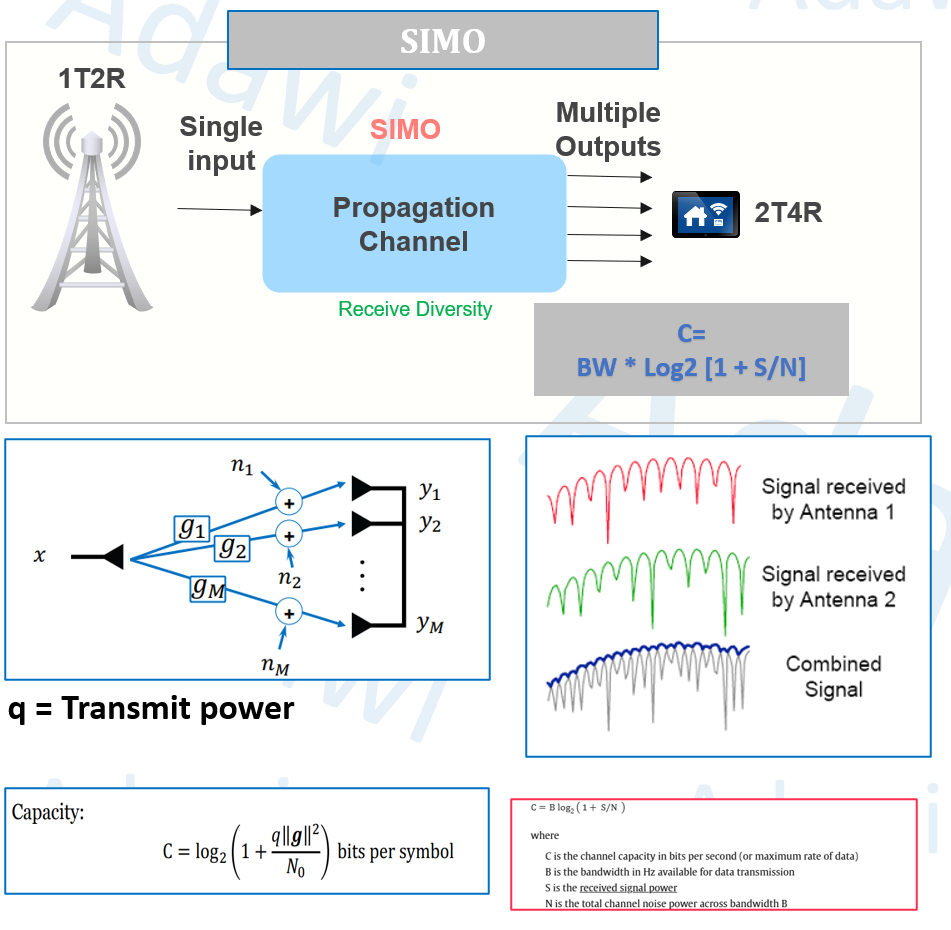
4.1 SIMO: one transmitter, multiple receivers
Let us start with the easiest case.
- In SIMO, there is one transmitting antenna and multiple receiving antennas. The main benefit here is receive diversity.
- The signal is transmitted only once, but it is received by more than one antenna. Because the channel is different at each receive branch, one received copy may be weak while another one may be stronger. Instead of depending on only one branch, the receiver can use the available branches more intelligently.
- This can be explained through so-called Maximum Ratio Combining (MRC). The idea is simple:
- each receive antenna captures the same signal
- each copy may have a different quality
- the receiver gives more weight to the stronger copy
- then it combines the received copies into one better output
- So SIMO improves reception quality not because it creates a new stream, but because it gives the receiver multiple chances to recover the same stream more reliably.
- A simple analogy: It is like listening to someone in a noisy room using both ears, while naturally relying more on the ear that hears the speaker more clearly. That is why SIMO is mainly about improving robustness and reducing fading impact, not about increasing the number of transmitted layers.
4.2 MISO: multiple transmitters, one receiver
Now take the same idea and flip it.
- In MISO, we have multiple transmit antennas but only one receive antenna. This is called transmit diversity.
- This is the core challenge in MISO. The below explains two main cases:
- Case 1: the transmitter has channel knowledge
If the transmitter knows the channel well, it can use beamforming or precoding more effectively. In that case, it can achieve both diversity gain and array gain- In simple words, the transmitter can shape the signal better toward the UE because it knows how the channel currently behaves.
- Case 2: the transmitter has partial or no channel knowledge
If the transmitter does not know the channel well, then it cannot beamform accurately. In that case, the space-time coding is used to achieve diversity gain, but not the full array gain that would come from accurate channel-aware beamforming.- A simple way to understand MISO is through the following analogy: Imagine several people trying to send the same message to one listener. If they know exactly where the listener is and how the sound is traveling, they can coordinate better and focus the message more effectively. If they do not know that, they can still repeat the message in a smart coded way, but they cannot focus it as accurately.
- Case 1: the transmitter has channel knowledge
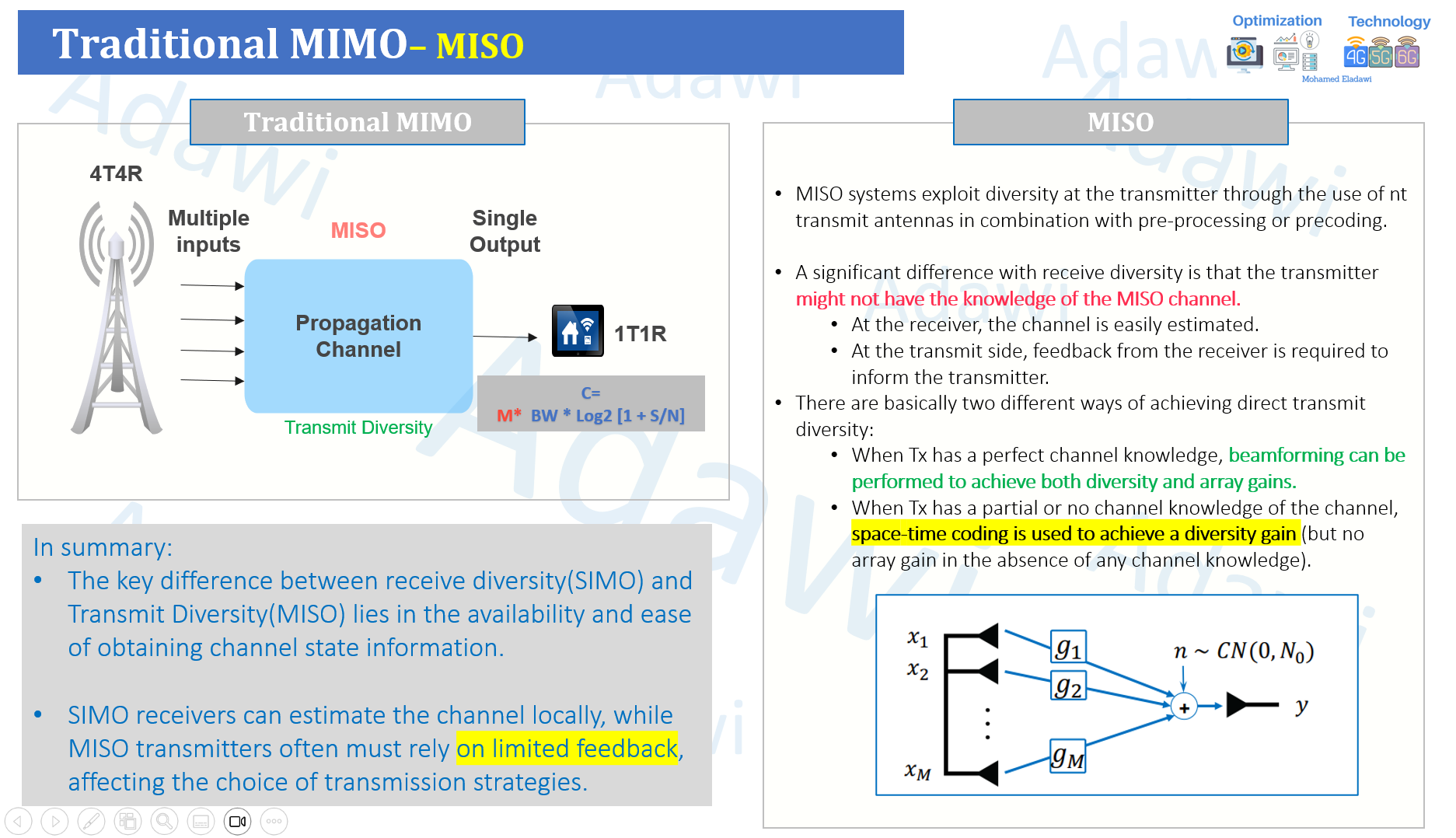
So the key learning here is:
- SIMO is easier from a channel-knowledge point of view
- MISO can also give gain, but it depends more on transmitter knowledge and feedback
4.3 MIMO: multiple transmitters, multiple receivers
Now we come to the most complete case.
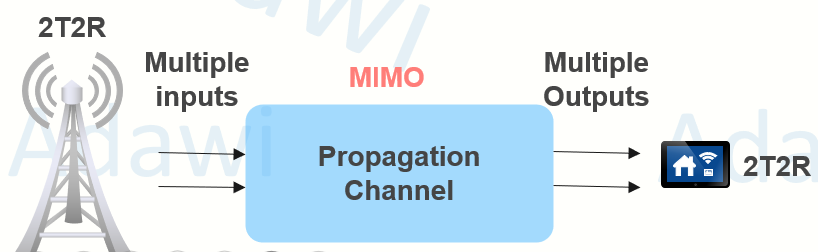
- In MIMO, both sides use multiple antennas. This is where the system can combine different gains together depending on the transmission mode and channel condition.
- MIMO can provide the following:
- receive diversity
- transmit diversity
- array gain
- spatial multiplexing
- The easiest gain to visualize is spatial multiplexing. Instead of sending only one data stream, the transmitter can send multiple independent streams in parallel using the same time and frequency resources. If the radio condition is good enough and the receiver can separate those streams correctly, the throughput can increase strongly.
- That`s why MIMO is always linked to the idea of improving capacity. One path is to improve signal quality and SNR. Another path is to send more than one stream, which directly improves the data rate.
- In very simple terms:
- diversity = make the same data more reliable
- spatial multiplexing = send more data at the same time
4.4 Diversity gain, array gain, and beamforming: what is the real difference?
The below gives a very useful high-level separation between the gains.
Diversity gain:
- Diversity gain is mainly about fighting fading.
- If one signal path becomes weak, another path may still be usable. That is why diversity improves reliability and reception quality.
- You can think of diversity as: “Do not rely on only one version of the signal.”
Array gain:
- Array gain comes from using multiple antennas to create a stronger effective signal in the desired direction.
- This does not necessarily mean sending more streams. It can simply mean that by combining the antenna effect properly, the signal becomes more concentrated toward the UE.
- You can think of array gain as: “Use many antennas together so the useful signal becomes stronger.”
Beamforming:
- Beamforming is closely related to array gain, because it is the practical way of steering or shaping energy more intelligently.
- The important message is that beamforming is not new. Even traditional MIMO already had beamforming, especially with systems like 4T4R and 8T8R. But the gain was limited because the number of antenna elements was still limited.
- So traditional MIMO already had the concept. Massive MIMO simply makes it far more powerful.
Spatial multiplexing:
- Spatial multiplexing is different from the above three because it is not mainly about making one stream cleaner. It is about sending multiple streams at once.
- That is why spatial multiplexing is strongly linked to throughput improvement.
4.5 SU-MIMO and MU-MIMO: one user or multiple users
The gain section also links beamforming to SU-MIMO and MU-MIMO.
- SU-MIMO means multiple layers/streams are used for the same UE
- MU-MIMO means different beams or layers can be directed to different UEs
So the real transition to Massive MIMO is not that the idea suddenly changes. The idea stays the same, but the antenna system becomes much more powerful. That is why Massive MIMO can deliver:
- much better directivity
- stronger beamforming gain
- better beam efficiency
- better vertical and horizontal control
- much better MU-MIMO efficiency
Section 5
Traditional MIMO vs Massive MIMO: Beamforming Evolution
5.1 Beamforming is not new
- Beamforming is not a new concept in mobile networks. It has existed in simpler forms since the early generations of wireless systems.
- Even sectorization, antenna tilt, and RF shaping are all ways of controlling where RF energy goes.
- The basic idea is always the same: push more energy toward the intended coverage area and reduce radiation in unwanted directions.
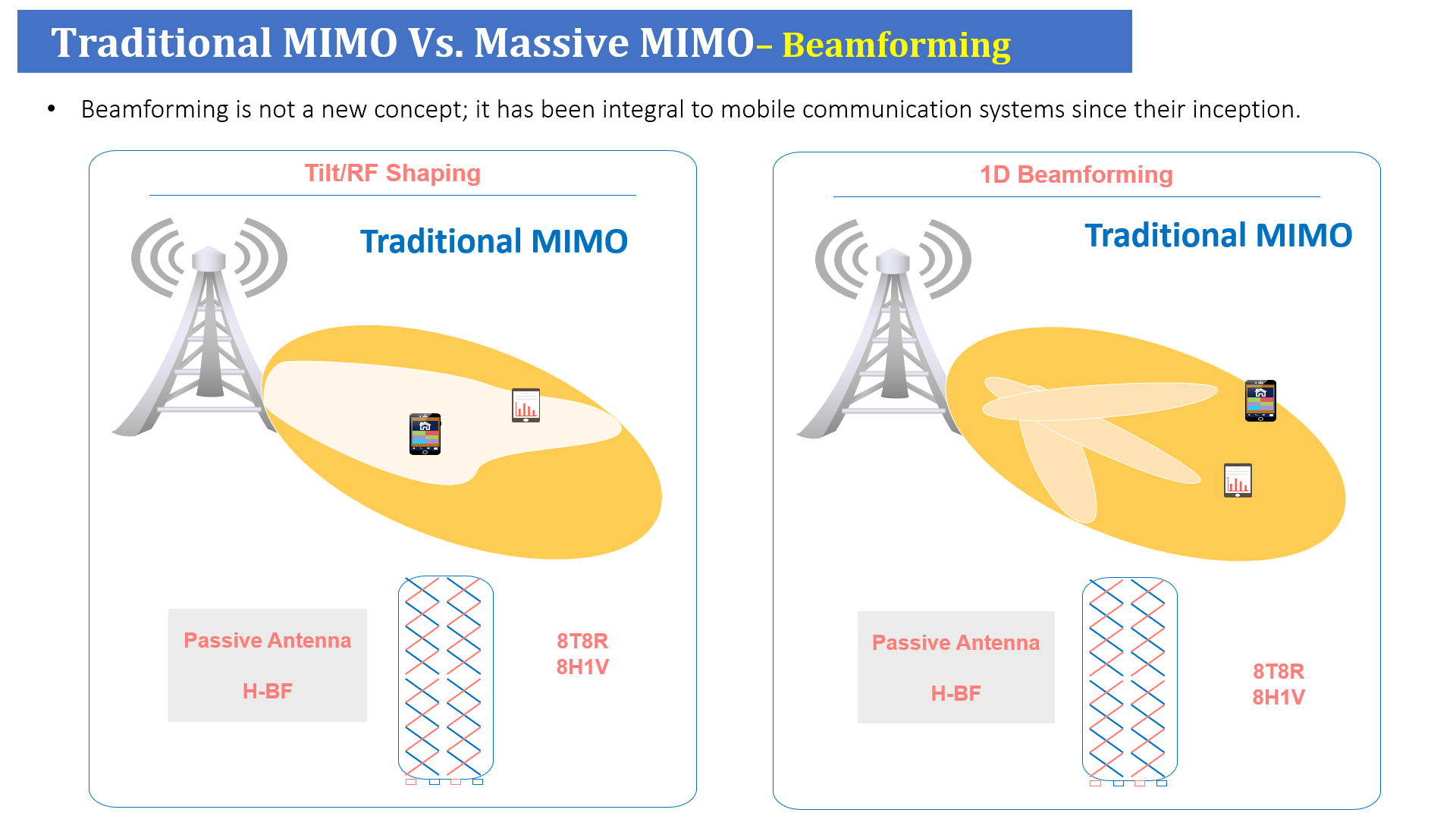
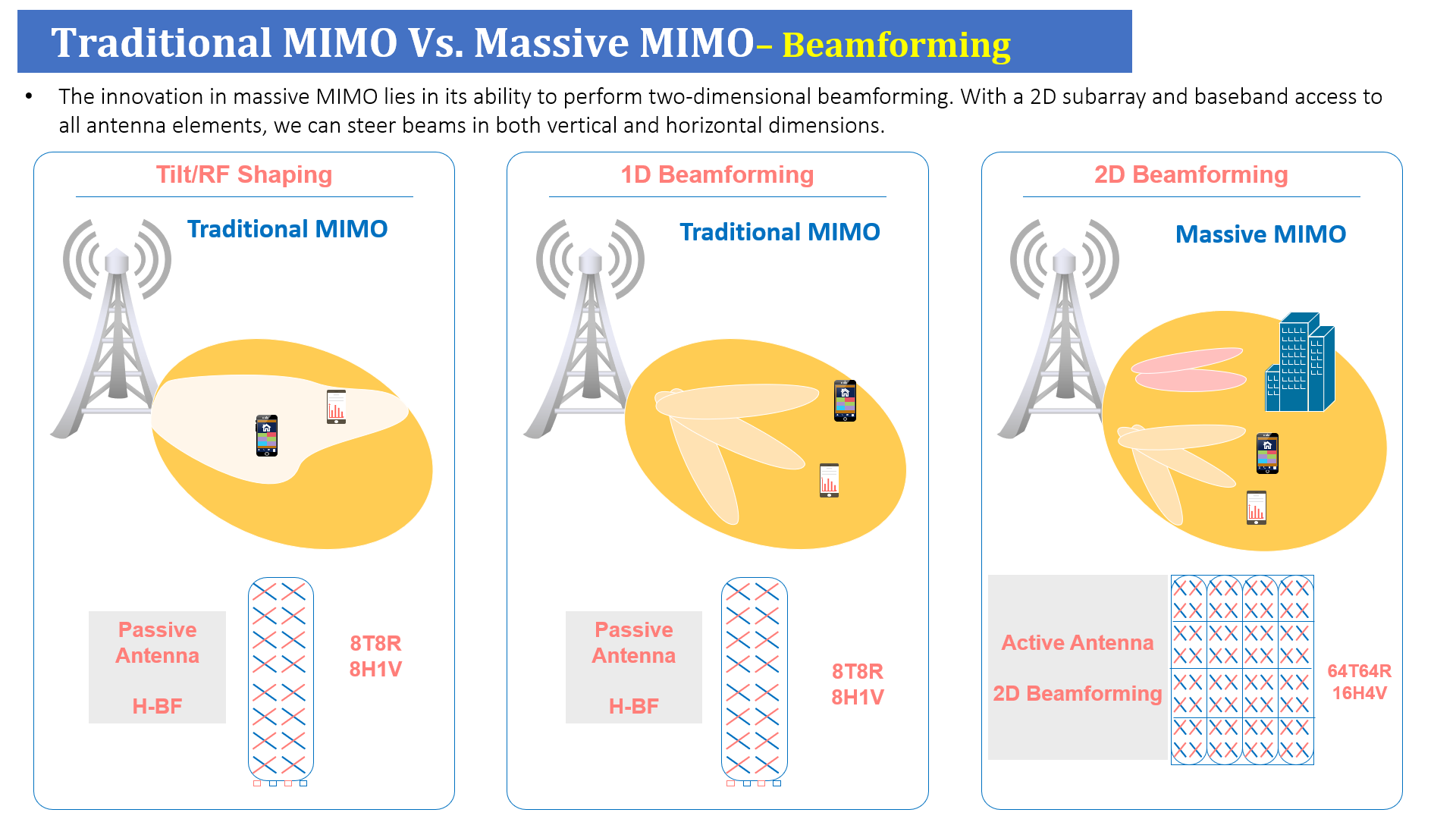
5.2 Traditional MIMO tilt RF shaping and 1D beamforming
- In traditional MIMO, the antenna is usually a passive antenna such as 8T8R with 8H1V. This gives beam control mainly in one dimension, with limited flexibility in the vertical plane.
- At the beginning, beam control is relatively broad through tilt and RF shaping. With further enhancement, the system can perform 1D beamforming, where the beam is steered more intelligently, but still mainly in one plane.
- This already improves directivity and helps guide energy better toward the user, but the gain is still limited by the lower number of antenna elements and the lack of strong vertical control.
5.3 Massive MIMO: the move to 2D beamforming
- The major step forward in Massive MIMO is 2D beamforming. With an active antenna, a 2D subarray structure, and access to all antenna elements, the network can steer beams in both the horizontal and vertical dimensions.
- This means the beam is no longer controlled only left and right. It can also be adjusted up and down in elevation. That gives much better flexibility for real deployment scenarios such as different user distances, different heights, and high-rise buildings. It also allows the beam to become sharper and more targeted.
- In simple terms:
- Traditional MIMO mainly supports one-dimensional beam control
- Massive MIMO supports two-dimensional beam steering with much higher precision
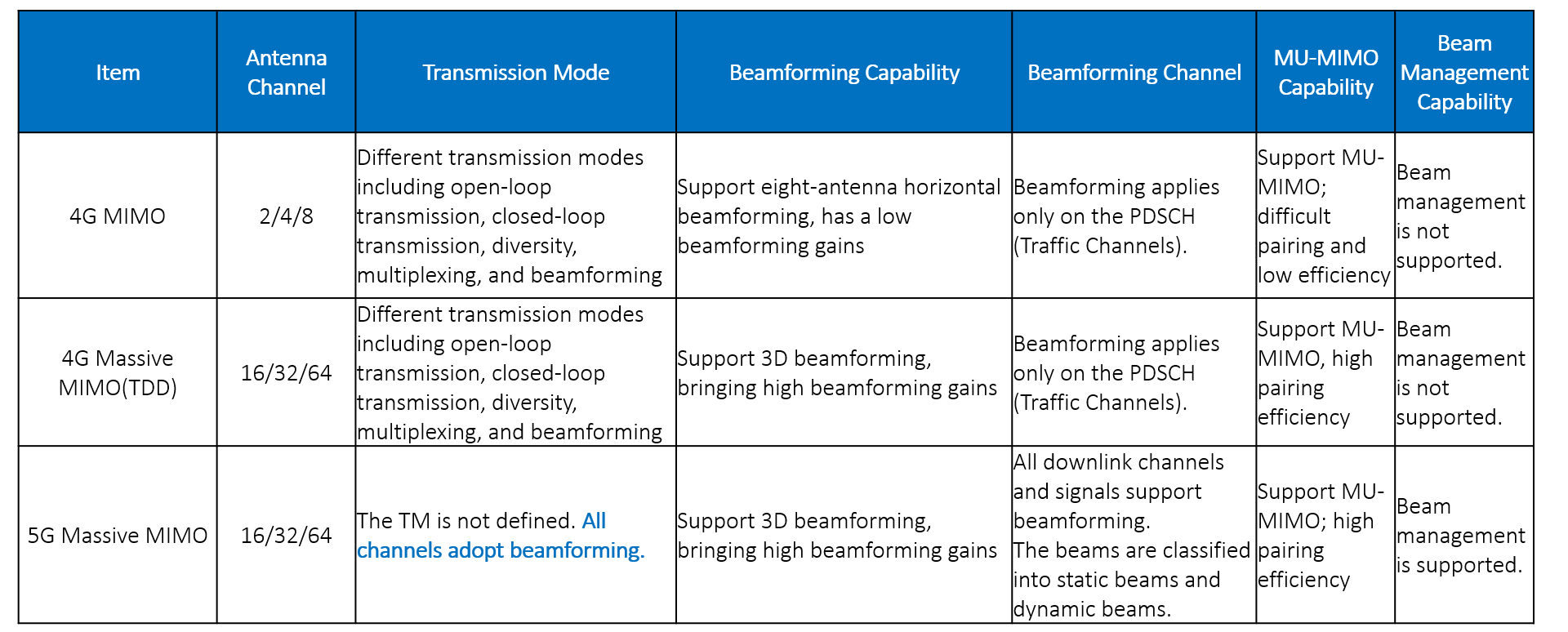
5.4 Evolution from 4G MIMO to 5G Massive MIMO
- The evolution from 4G MIMO to 5G Massive MIMO is not only about increasing the number of antennas. The bigger change is how beamforming is used, which channels can benefit from it, how efficiently MU-MIMO can work, and whether beam management is supported.
- In 4G MIMO, the antenna channel is usually 2, 4, or 8, and the system relies on different transmission modes such as open-loop, closed-loop, diversity, multiplexing, and beamforming.
- Beamforming exists, but it is still limited, mainly horizontal, and applied only on the PDSCH traffic channel. MU-MIMO is supported, but user pairing is difficult and the overall efficiency is relatively low.
- Beam management is not supported.
- In 4G Massive MIMO (TDD), the antenna channel typically increases to 16, 32, or 64.
- This brings a clear jump in beamforming capability, with support for 3D beamforming and much higher beamforming gain.
- However, beamforming is still mainly applied on the PDSCH traffic channel, not across all channels. MU-MIMO efficiency becomes much better because beam separation and user pairing improve, but beam management is still not supported.
- In 5G Massive MIMO, the antenna channel also commonly starts from 16, 32, or 64, but the key difference is that the classical fixed transmission-mode concept is no longer the focus.
- Instead, all channels adopt beamforming. Beamforming is no longer limited to traffic only; all downlink channels and signals can benefit from it.
- Beams are also handled in a more advanced way through static beams and dynamic beams, and beam management becomes a core part of the system. This is one of the biggest practical differences between 5G Massive MIMO and earlier generations.
- From an evolution point of view, the journey can be summarized like this:
- 4G MIMO → limited beamforming, mainly on traffic channels
- 4G Massive MIMO → stronger 3D beamforming, but still traffic-channel focused
- 5G Massive MIMO → beamforming becomes a wider system concept with beam management and support across downlink channels and signals
Section 6
Summary (Key takeaways)
- 5G Massive MIMO is more than just a higher antenna count; it is an active antenna architecture that improves coverage, quality, capacity, and beam control.
- The main function of Massive MIMO is to focus RF energy more efficiently toward the user, while also improving directivity, beam efficiency, spatial multiplexing, and MU-MIMO performance.
- The shift from passive to active antenna solutions is a major part of the gain, because integrating the radio and antenna into one unit enables more elements, lower feeder loss, and much better beamforming flexibility.
- Understanding antenna specifications such as gain, front-to-back ratio, side lobe level, beam efficiency, sweeping range, and polarization is important because these parameters explain how well the antenna controls useful and unwanted radiation.
- Antenna terminology matters because the full Massive MIMO panel is built in layers, starting from the antenna element, then the subarray, and finally the complete antenna array.
- Traditional MIMO types such as SIMO, MISO, and MIMO provide the basic foundation, showing how multiple antennas can improve reliability, signal strength, and throughput in different ways.
- SIMO mainly provides receive diversity by combining multiple received copies of the same signal to improve robustness against fading.
- MISO mainly provides transmit diversity, but its performance depends strongly on how much channel knowledge is available at the transmitter.
- MIMO combines multiple antenna gains together and introduces spatial multiplexing, which improves capacity by transmitting multiple streams in parallel.
- Diversity gain, array gain, beamforming, and spatial multiplexing are related but different concepts, and understanding this difference is essential before going deeper into Massive MIMO.
- SU-MIMO and MU-MIMO show that beamforming is not only about improving one user’s signal, but also about separating users better in space and using radio resources more efficiently.
- Beamforming itself is not new, but traditional MIMO was mostly limited to tilt, RF shaping, and 1D beamforming with lower antenna counts and limited vertical control.
- Massive MIMO introduces a major step forward through 2D beamforming, where beams can be steered in both the horizontal and vertical dimensions with much higher precision.
- The evolution from 4G MIMO to 5G Massive MIMO is not only an antenna evolution, but also a beamforming evolution, where beamforming expands from mainly traffic-channel use into a wider system concept supported across downlink channels and signals with beam management.
Video for the same
References
- 5G NR in Bullets
- The new generation wireless access technology book
- Samsung White Paper(MassiveMIMOforNRTechnicalWhitePaper-v1.2.0)