Full VoLTE E2E Training Course | IMS, SIP Signaling, Registration, MO/MT Call Flow & RAN Features (Video & Materials)

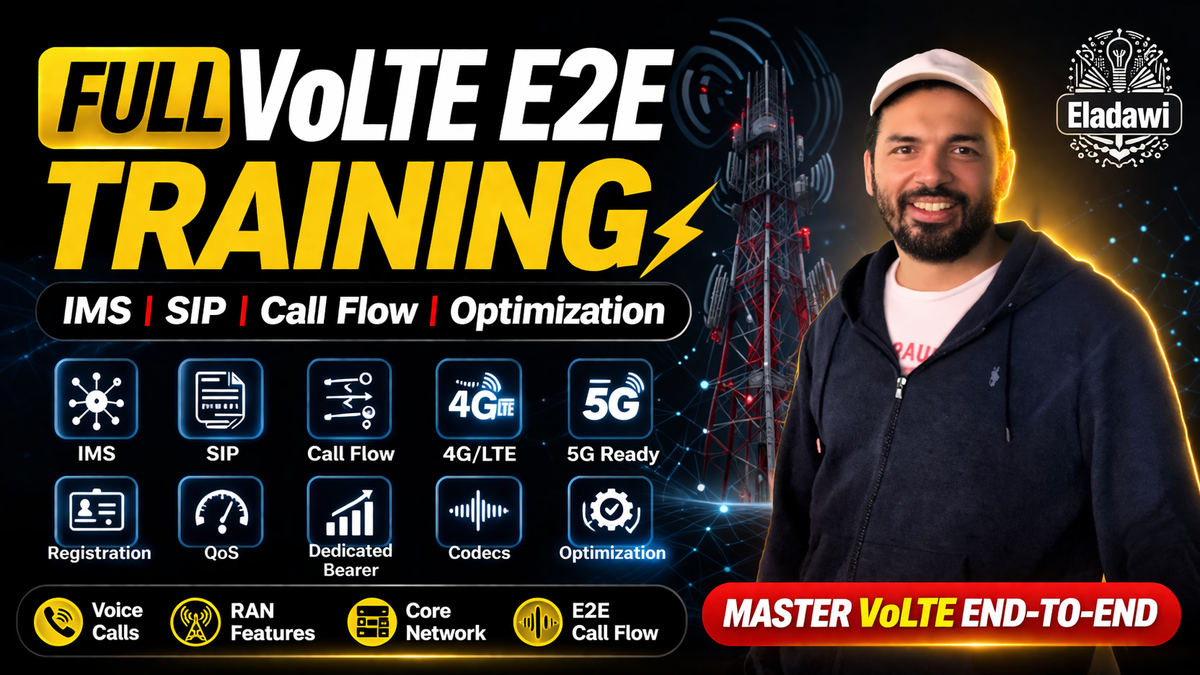
In this Full VoLTE E2E Training Course, you will learn how VoLTE works end to end across UE, RAN, EPC, and IMS. This training covers VoLTE overview, traffic model, speech codecs, IMS architecture, VoLTE bearers and protocols, 4G attach flow, IMS registration, SIP signaling, SDP, RTP/RTCP, MO and MT call flows, dedicated bearer activation, and key VoLTE optimization features for LTE.
You’ll also understand the role of major IMS and core entities such as P-CSCF, I-CSCF, S-CSCF, MTAS/MMTEL, PCRF, SGW, PGW, and HSS, along with practical concepts like QCI1 vs QCI5, SIP over TCP, RTP over UDP, codec negotiation, UE and network capability checks, PDN connectivity request, P-CSCF discovery, and IMS voice over PS support.
Training Materials & Resources:
- Part of the materials uploaded at the below link:
https://www.mohamedeladawi.com/e2e-volte-training-materials/ - Full Training (Paid) Materials added at the below link:
Price: €15.00
Get 50% discount using this code: C1NJMYNW
For support and policies: