LTE RACH/RRC Call Flow & PRACH Parameter Details, RA-RNTI, SIB2 | 4G E2E Signaling Session 2

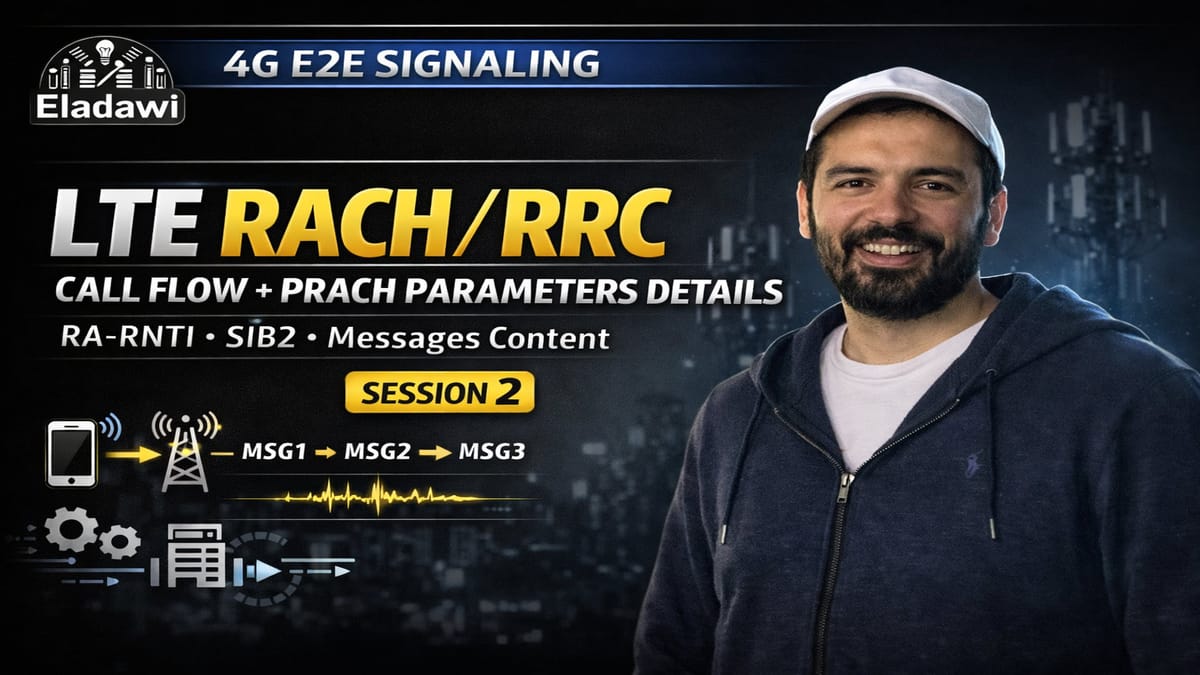
Welcome to Session 2 of the 4G End-to-End Course.
In this video, we break down the LTE Random Access Procedure (RACH) step by step and explain how the UE moves from downlink synchronization to uplink synchronization before starting the connection setup process.
This session covers the complete RACH overall overview, RACH types, and call flow explanation, including:
- Contention-Based Random Access (CBRA)
- Contention-Based Random Access (CBRA)
- PRACH detailed call flow
- UE identities overview
- RA-RNTI explained
- How UE finds the correct RAR
- System Information acquisition recap
- SIB2 content and RACH-related parameters
- PRACH frequency offset
- PRACH configuration index
- PRACH format Root Sequence Index
- Preamble information parameters
- Preamble power ramping
- RA supervision parameters
- RACH MSG1, MSG2, and MSG3 content
- RRC Setup call flow