What is the 5G SRS Transmission Comb type?

What is the SRS Transmission Comb type?
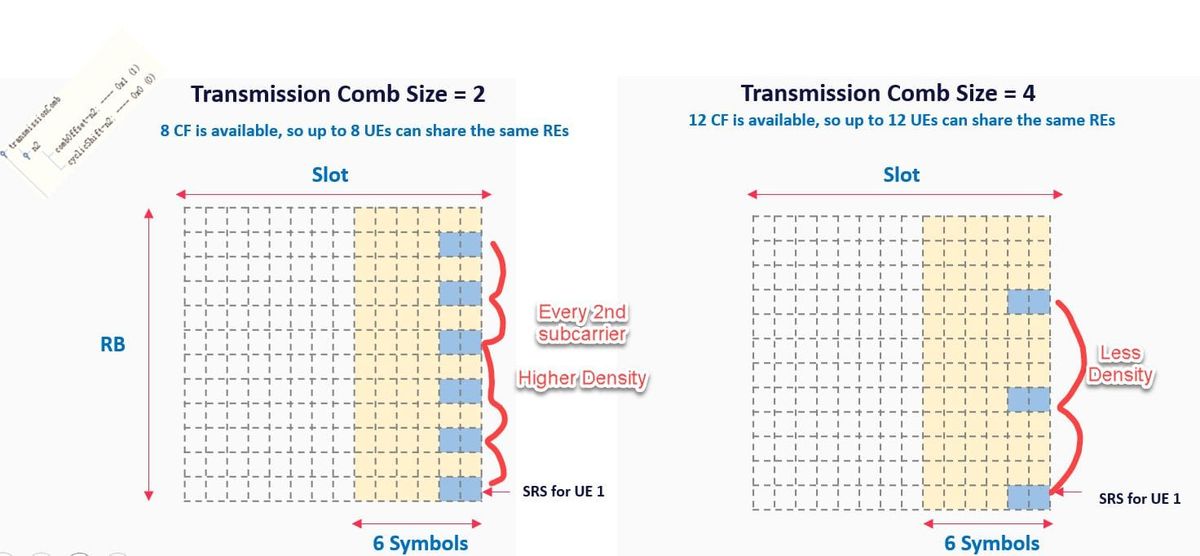
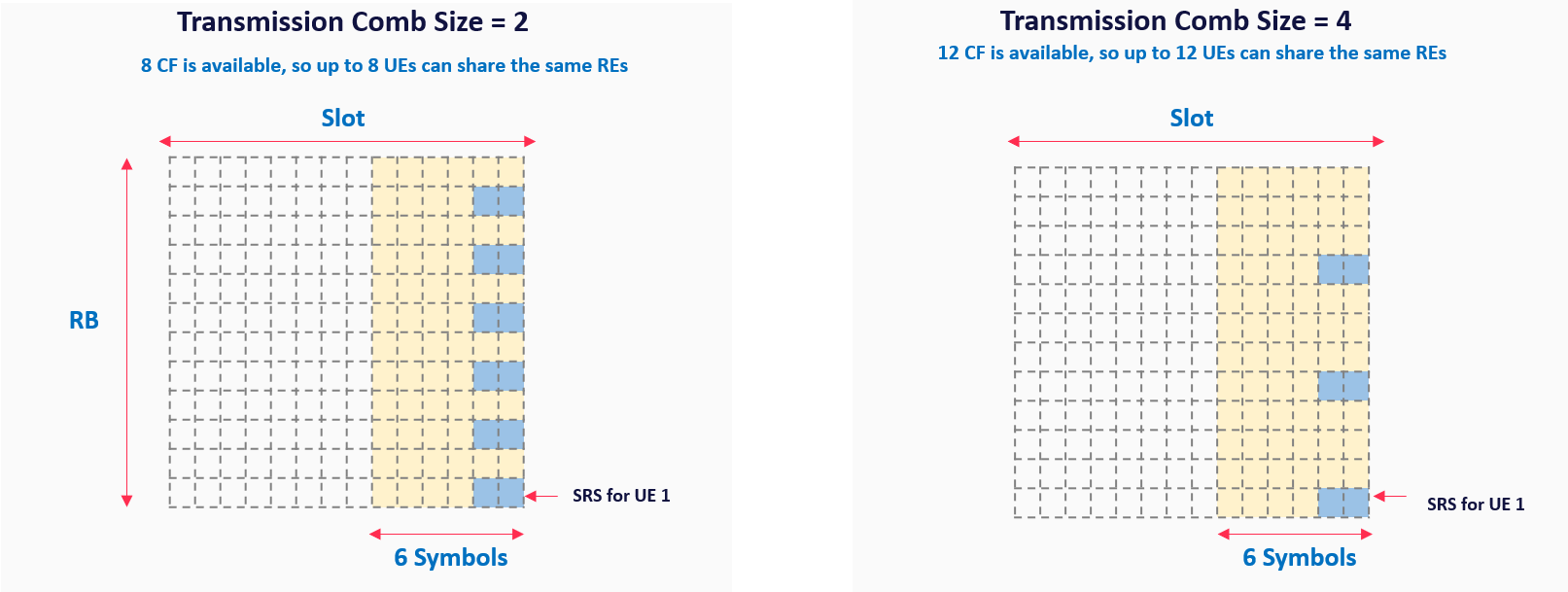
- An SRS Transmission can occupy up to 272 RBs in the frequency domain, but an individual UE does not transmit the SRS on every subcarrier but selects specific subcarriers based on transmission comb type.
- 5G supports two types of transmission Comb(2 & 4):
- Transmission Comb 2 means an individual UE transmits on every second subcarrier.
- This allows two groups of UE to be frequency multiplexed with a single Sub-Carrier offset.
- Transmission Comb 4 increases the frequency domain multiplexing capability but reduces the quality of the SRS.
- Because the UE will transmit the SRS at a number of Subcarriers. ( Higher SCS density improves channel measurement)
- Transmission Comb 2 means an individual UE transmits on every second subcarrier.
- UE sharing the same transmission comb are code multiplexed by allocating different cyclic shifts.
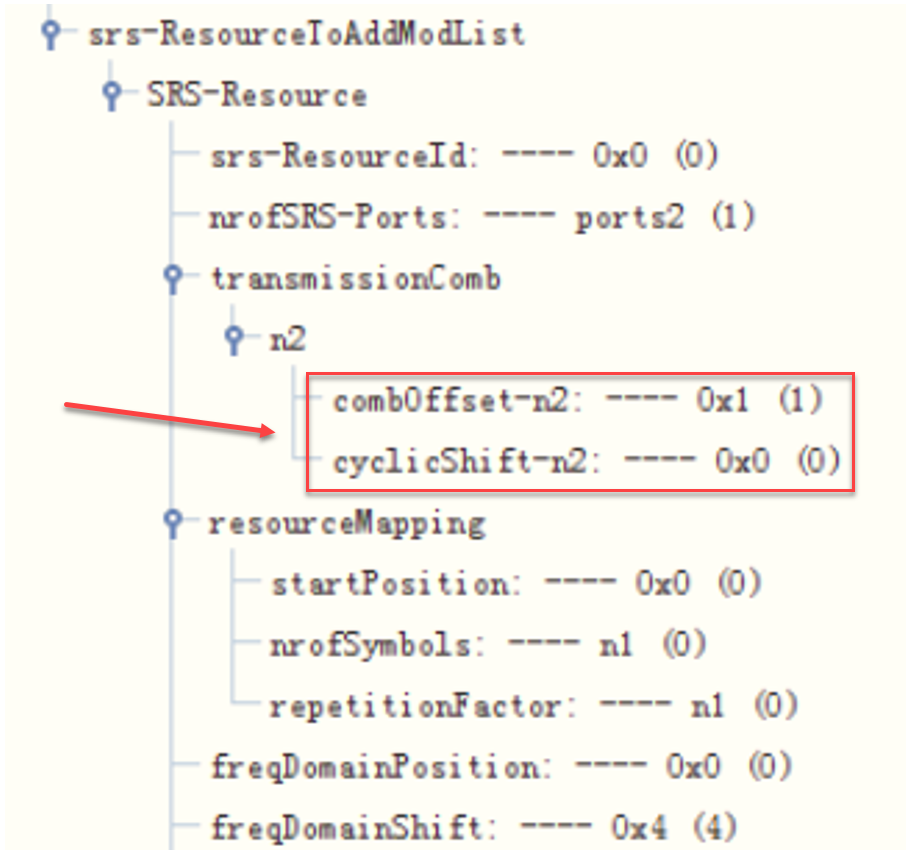
RRC reconfiguration details extracted from DT logs, showing the TX comb configuration.
Source: 5G NR in Bullets
refer to the below video for more details about SRS