Read more
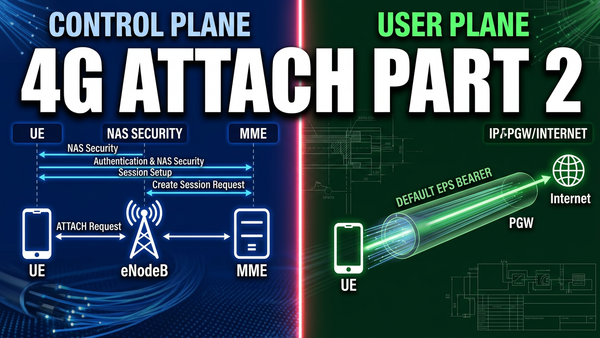
4G LTE Attach Procedure Explained Step by Step: Part 2
Session #6 of our FREE 4G/LTE Fundamentals & End-to-End Signaling training is now available on YouTube! "English Speaker" In this session, we continue with Part 2 of the 4G LTE Attach Procedure, focusing on: * End-to-end signaling flow * Detailed explanation of signaling messages and
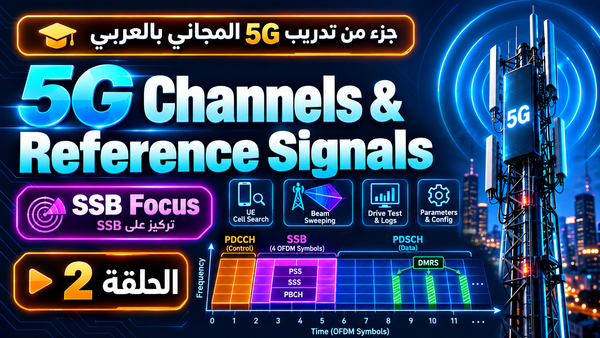
5G NR SSB Deep Dive: Cell Search, Beam Sweeping, Power & Optimization | بالعربي
في الحلقة دي من سلسلة 5G بالعربي، هنبدأ Deep Dive عملي ومفصل في 5G NR Synchronization Signal Block (SSB)، من الـ fundamentals لحد الـ practical impact على coverage, accessibility, beam management and optimization. هنبدأ الأول بفهم الفرق بين 4G and 5G Synchronization Signals، وإزاي طريقة إرسال الـ synchronization signals اتغيرت
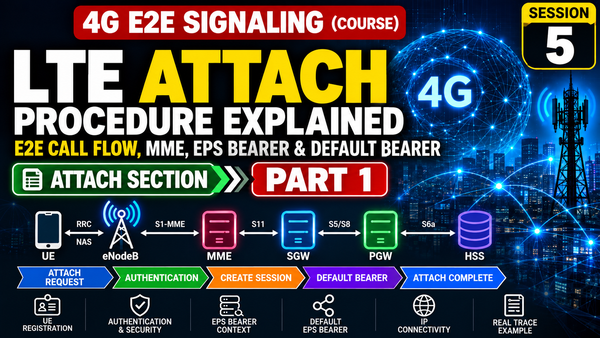
LTE Attach Procedure | E2E Call Flow, MME, EPS Bearer & Default Bearer | 4G E2E Signaling Session 5
Session 5 of my 4G/LTE E2E Signaling series is out: the LTE Attach Procedure. Attach is the first thing a phone does on an LTE network. It registers, gets authenticated, receives an IP address and sets up the Default EPS Bearer. In this session: → Attach Functions & Triggering Conditions
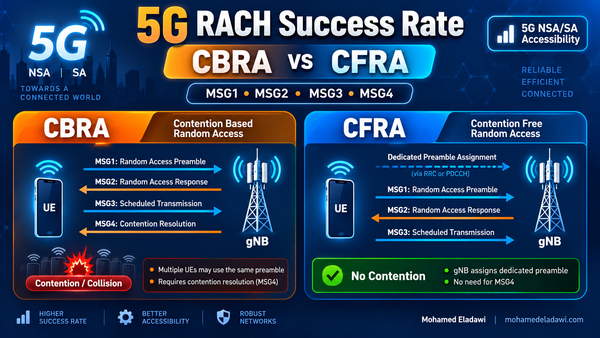
RACH CBRA/CFRA Call Flow and Use Cases
Overview The Random Access procedure can be initiated in different situations depending on whether the network already knows the UE and whether dedicated resources can be assigned. Random Access Channel, or RACH, is used whenever the UE needs to establish or recover uplink synchronization with the network. In 5G, Random