4G/5G UL Inter-Cell Interference Randomization Feature

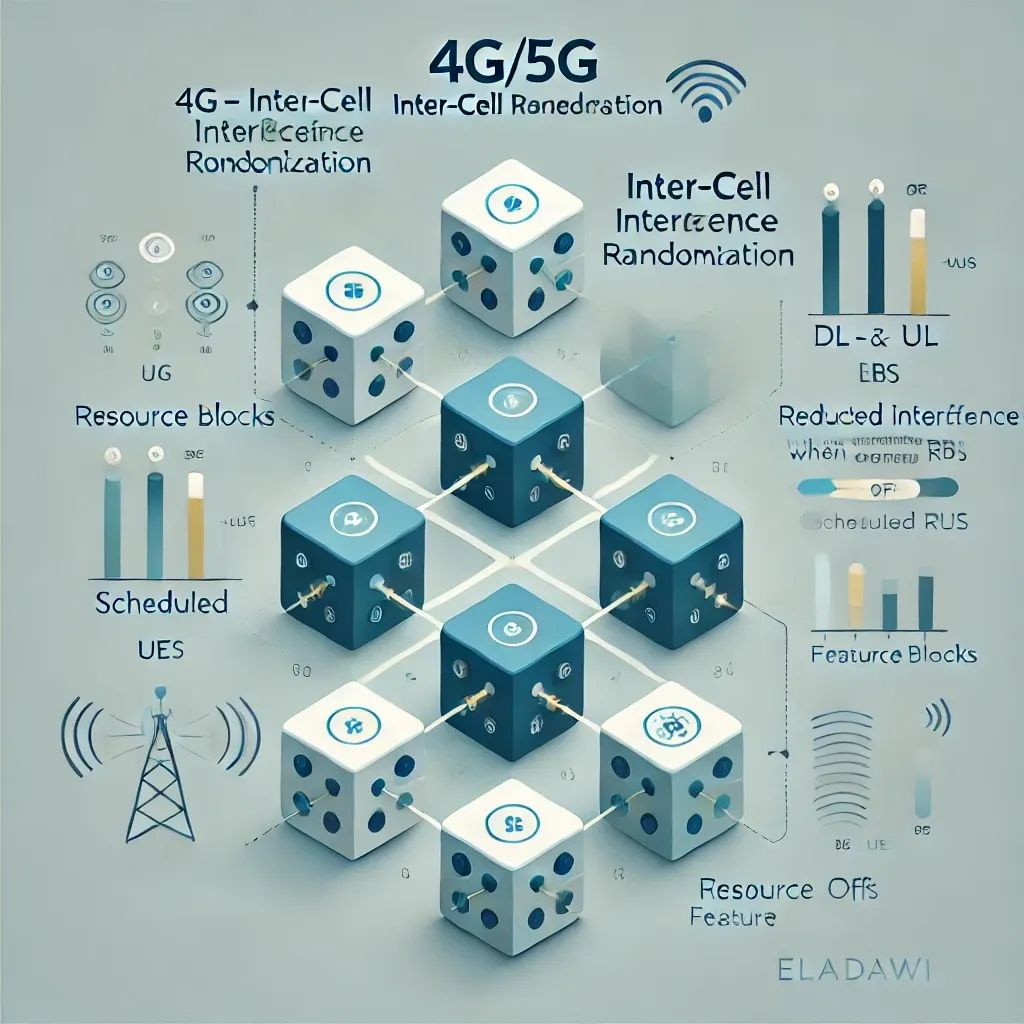
4G/5G – DL/UL Inter-Cell Interference Randomization Brief Description and expected benefits:
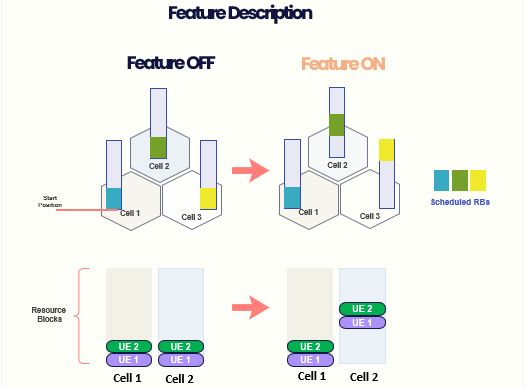
- When the Cell Load is low; the g-NB.(Scheduler) staggers the resources allocated to adjacent cells as far away from each other as possible in multi-cell networking scenarios.
- Usually the resources allocation will be staggered based on the PCI(i.e Mod3). However vendors can offer different implementation algorithms.
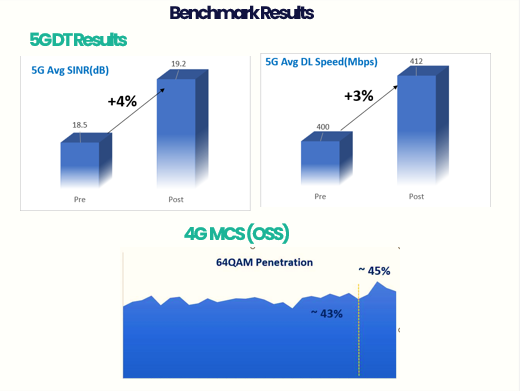
- This reduces interference from neighboring cells to UEs in the local cell and improves downlink system capacity and cell edge UE throughput when the network is moderately or lightly loaded.
- Increases the spectral efficiency, percentage of high-order modulation and coding schemes (MCSs)
- Decreases Service Drop Rate
Testing Recommended Scenarios:
- The network is moderately or lightly loaded. (PRB <40%)
- In heavy load scenarios, this feature may deliver no benefits. However, it does not generate negative results.
How to Evaluate ❓
- Evaluate MCS KPIs.
- DL/UL User and Cell Throughput.
- Average UL Interference.