5G DL Beam Management Deep Dive | Massive MIMO Session 3

Session 3 of the 5G Massive MIMO Training Series is Now on YouTube!
In this session, we take a deep dive into Downlink (DL) Beam Management, a key aspect of Massive MIMO that plays a crucial role in enhancing 5G network performance.
What You’ll Learn in This Video:
- Introduction to 5G Beamforming
- 5G Beamforming: Channels & Reference Signals
- Overview of 5G Beam Management
- Eigen-Based vs. Grid-of-Beams Beamforming
- Initial Beam Acquisition – SSB Beam Sweeping (P1)
- Beam Refinement – CSI-RS (P2)
- Traffic Beams: Codebook (CSI-RS) vs. Reciprocity (SRS)
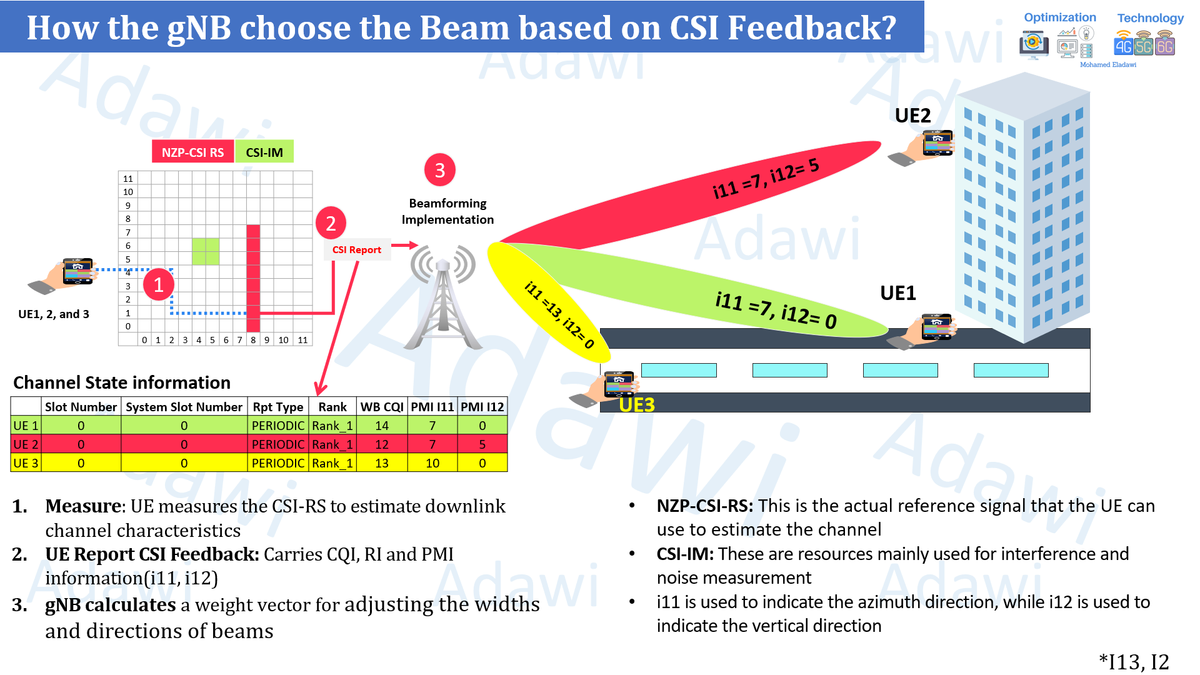
- 5G CSI Feedback Status (CSI-RS)
- Traffic Beams: Codebook Type I (Single Antenna Panel)
- Traffic Beam based on PMI Visualization
- UE Capability Check for Codebook and CSI-RS Ports
- RRC Reconfiguration: Codebook Configuration Check
- Traffic Beams: Codebook Type II (Single Antenna Panel)
Free Video:
Paid Material
This topic is also available as a paid PDF material.
Title: 5G MM Training - DL Beam Management
Price: €5.00
Paid PDF material focused on downlink beam management concepts in 5G Massive MIMO training.
Status: Checkout link will be activated soon.
For support and policies: