15 NR(5G) RAN Features Explained: Ace Your Interview Preparation

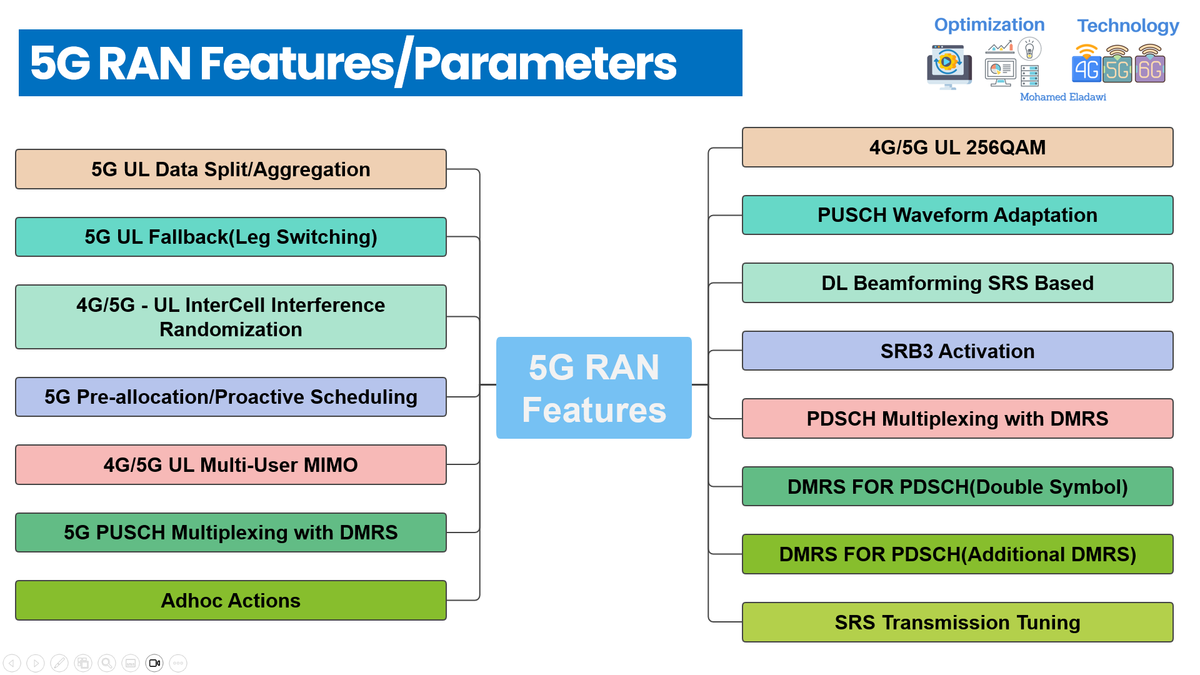
Prepare for your next interview with this quick and clear breakdown of important 5G RAN features/parameters. (Video added below)
Content:
Key 4G/5G Uplink (UL) Features & Enhancements
- 4G/5G UL 256QAM – Higher-order modulation for increased uplink capacity and throughput.
- PUSCH Waveform Adaptation – Optimizing uplink signal waveform for better performance in varying radio conditions.
- DL Beamforming SRS Based – Downlink beamforming using Sounding Reference Signal (SRS) feedback for enhanced coverage and efficiency.
- SRB3 Activation – Enabling a dedicated signaling radio bearer for efficient control plane communication.
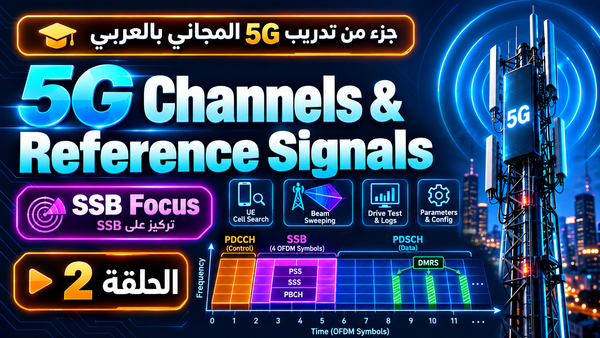
- PDSCH Multiplexing with DMRS – Enhancing physical downlink shared channel (PDSCH) transmission with Demodulation Reference Signals (DMRS).
- DMRS for PDSCH (Double Symbol) – Improving channel estimation and interference resilience with double-symbol DMRS allocation.
- DMRS for PDSCH (Additional DMRS) – Additional DMRS configurations to enhance robustness in complex radio environments.
- SRS Transmission Tuning – Optimizing SRS transmission parameters for better uplink scheduling and beamforming accuracy.
- 5G UL Data Split/Aggregation – Distributing uplink traffic efficiently across multiple carriers or transmission paths.
- 5G UL Fallback (Leg Switching) – Seamless transition to alternative uplink transmission modes for improved reliability.
- 4G/5G - UL InterCell Interference Randomization – Reducing uplink interference between cells to enhance network performance.
- 5G Pre-allocation/Proactive Scheduling – Advanced scheduling techniques to allocate uplink resources proactively, reducing latency.
- 4G/5G UL Multi-User MIMO – Enhancing spectral efficiency by enabling multiple users to share uplink resources simultaneously.
- 5G PUSCH Multiplexing with DMRS – Optimizing physical uplink shared channel (PUSCH) transmission with DMRS for better decoding.
- Adhoc Actions – Dynamic adjustments and network optimizations based on real-time conditions and KPIs.