5G PDCCH Optimization Approach: Understand DCI Applications, CSS vs USS and What Is Consuming PDCCH Resources


Introduction
When PDCCH utilization becomes high, the first question should not immediately be: Which PDCCH optimization feature should I enable?
A better starting point is to understand what the PDCCH resources are actually being used for.
PDCCH is involved in different procedures such as SIB1 transmission, Other System Information, Random Access, Paging, and normal user data scheduling.
By understanding the relationship between Search Spaces, DCI types, and their applications, it becomes much easier to identify which area is consuming the PDCCH resources and where the optimization should start.
Topics covered
- Why PDCCH Applications Matter
- Common Search Space CSS and User-Specific Search Space USS
- How Common Procedures Consume PDCCH Resources
- User Data Scheduling and USS
- Aggregation Level and PDCCH Resource Consumption
- How to Approach PDCCH Optimization
- Key Takeaways
🎓 Complete 5G RAN KPI Course
This PDCCH optimization topic is part of my complete 5G RAN KPI course, covering practical 5G NSA and SA optimization.
50% Discount (until October 6):
https://www.udemy.com/course/5g-ran-kpi-masterclass/?couponCode=1B42BDAB5C111FCDEB33
(1) Why PDCCH applications matter
The UE monitors the configured Search Spaces to detect the PDCCH and decode the corresponding DCI — Downlink Control Information.
Different DCI formats are associated with different applications.
For example, PDCCH can be related to:
- SIB1
- Other System Information
- Random Access
- Paging
- User data scheduling
For optimization purposes, there is no need to memorize every DCI format.
The important point is to understand:
Which application is consuming the PDCCH resources?
This helps us move from simply seeing a high PDCCH utilization KPI to understanding where the utilization is coming from.
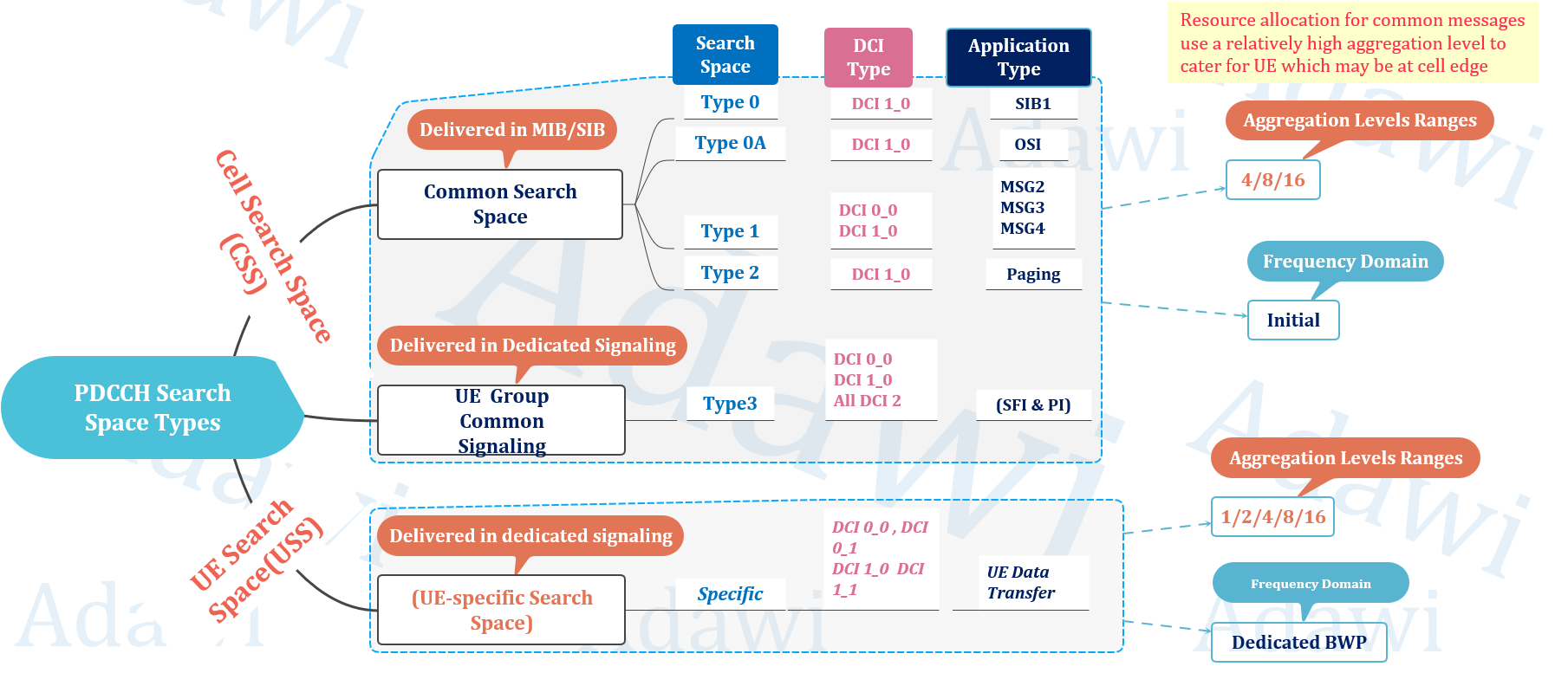
(2) Common Search Space CSS and User-Specific Search Space USS
At a high level, the Search Spaces can be divided into two main groups:
Common Search Space CSS
The Common Search Space is mainly used for information and procedures that may need to be received by multiple UEs.
Applications discussed in this category include:
- SIB1
- Other System Information
- Random Access
- Paging
The Common Search Space itself includes different Search Space types, but for optimization the main focus should be on the application using those resources, rather than memorizing all Search Space or DCI combinations.
User-Specific Search Space USS
The User-Specific Search Space is configured for a particular UE and is mainly associated with normal user scheduling.
This is where PDCCH resources are heavily involved in scheduling the UE's:
- Downlink data
- Uplink data
The configuration is normally delivered through dedicated signaling.
| Search Space | Main usage | Typical applications |
|---|---|---|
| CSS | Common procedures | SIB1, Other SI, Random Access, Paging |
| USS | UE-specific scheduling | DL and UL user data scheduling |
(3) How common procedures consume PDCCH resources
Understanding the applications of the Common Search Space is especially important because several network procedures can directly increase PDCCH resource consumption.
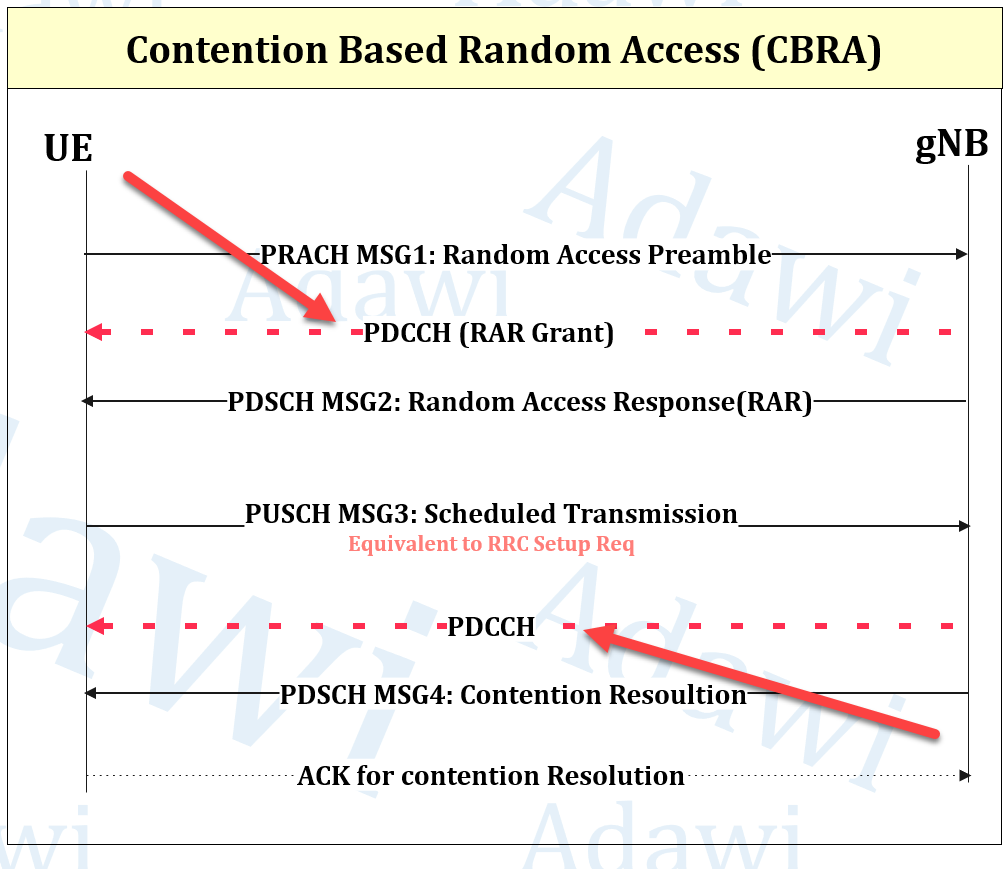
3.1 Random Access
During Random Access, the gNB needs to schedule the related Random Access messages.
For example, when the gNB sends the Random Access Response, PDCCH resources are required to indicate where the UE should receive the corresponding transmission.
Therefore:
More Random Access activity → More PDCCH transmissions → Higher PDCCH resource consumption
If a network has a very large amount of Random Access activity, this area should therefore be checked when investigating high PDCCH utilization.
3.2 SIB1 and Other System Information
System Information transmission also consumes PDCCH resources.
The configuration and transmission frequency of this information can therefore have a direct impact on PDCCH utilization.
If the related configuration results in frequent transmissions, more control-channel resources will be required.
So when common-channel PDCCH utilization is high, the SIB1 and Other System Information configuration should also be reviewed.
3.3 Paging
Paging is another important PDCCH application.
The Paging configuration determines how frequently the related Paging monitoring and transmission opportunities occur.
A configuration resulting in more frequent Paging activity can consequently increase the PDCCH resources required for Paging.
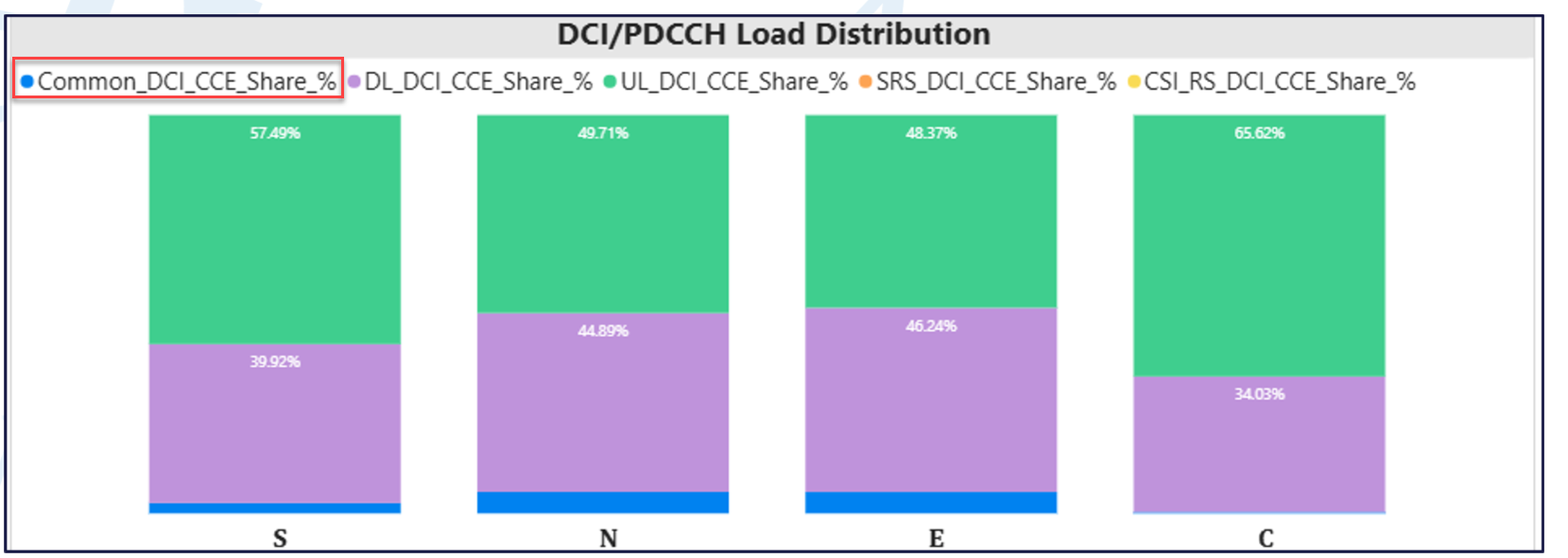
This means that high common PDCCH utilization should not automatically be considered a user-traffic problem.
It may come from:
- Random Access
- SIB1
- Other System Information
- Paging
(4) User data scheduling and USS
The second major area is the User-Specific Search Space.
Unlike the Common Search Space, this Search Space is mainly used for scheduling individual UEs.
It therefore becomes particularly important when the cell has a high amount of normal user scheduling activity.
The UE monitors its configured Search Space to receive the PDCCH carrying the DCI related to its data scheduling.
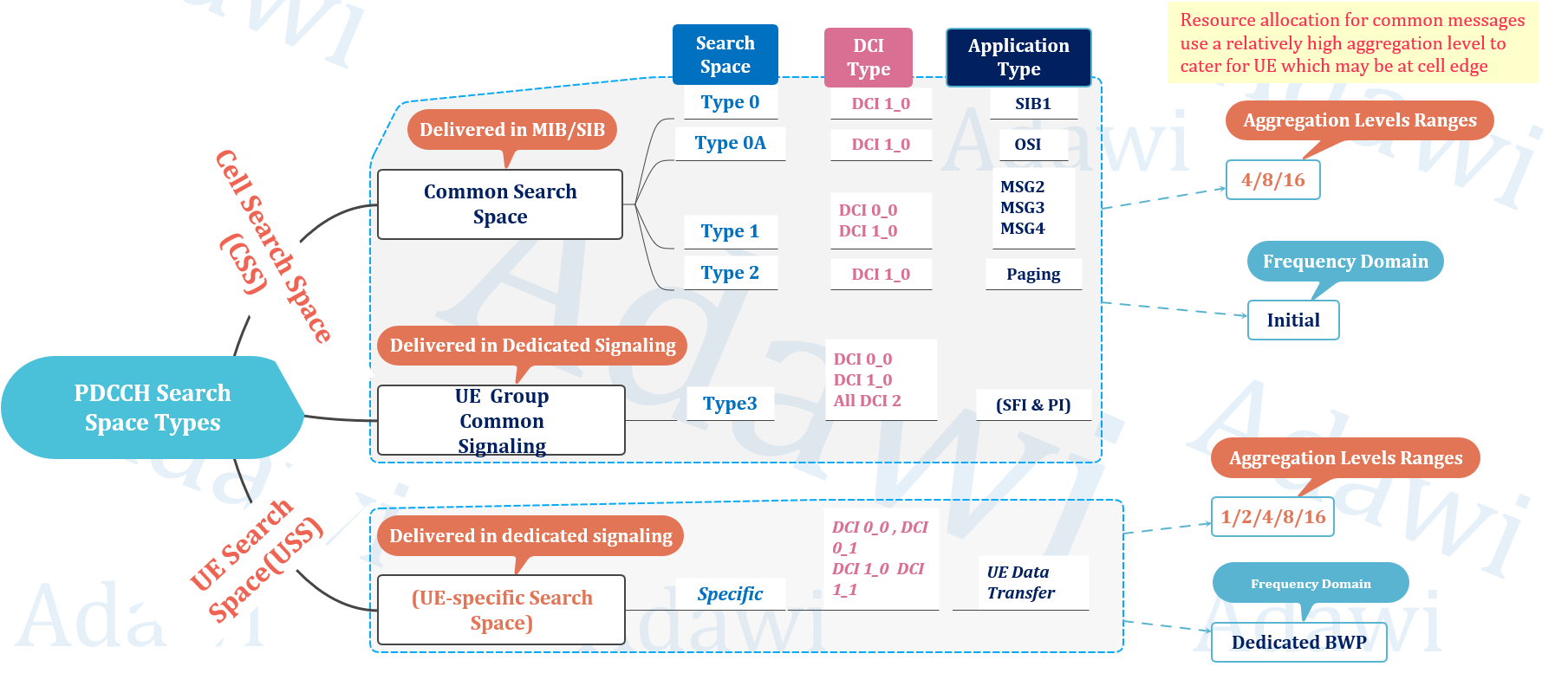
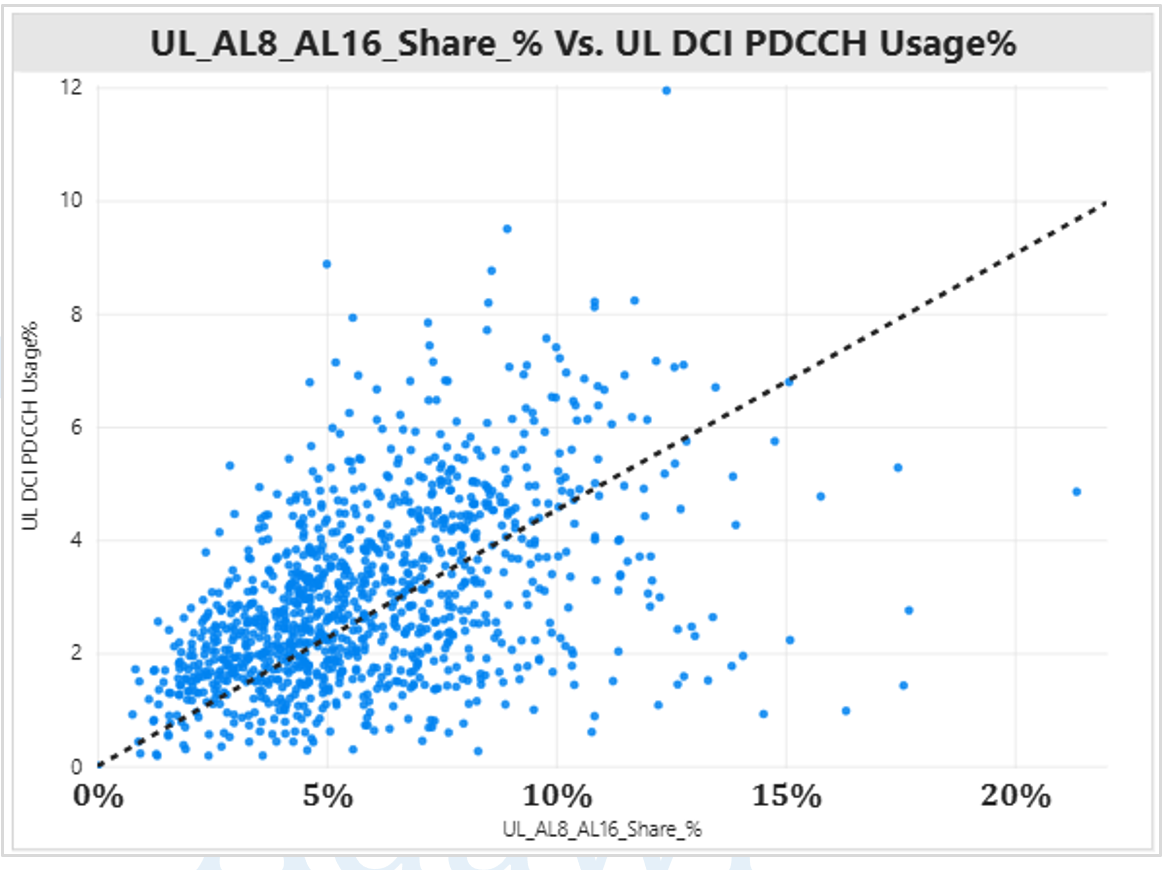
For USS, the aggregation levels discussed are:
- AL1
- AL2
- AL4
- AL8
- AL16
The related CORESET and Search Space information is normally configured as part of the UE's dedicated configuration.
(5) Aggregation level and PDCCH resource consumption
The Aggregation Level is another important part of PDCCH optimization.
A higher aggregation level means that more PDCCH resources are used for a single control transmission.
The configuration discussed for the Common Search Space starts from relatively higher aggregation levels because common information may need to be decoded by UEs with different radio conditions, including UEs close to the cell edge.
For example, a practical configuration for Common Search Space Aggregation Level choice between starting with:
- AL4
- AL8
If the cell has very good coverage, such as a well-designed indoor deployment, using an unnecessarily high starting aggregation level can consume additional PDCCH resources.
In such a scenario, starting from AL4 instead of AL8, where supported and suitable for the radio conditions, can reduce PDCCH resource consumption.
The important principle is:
Higher robustness should always be balanced against PDCCH resource consumption.
(6) How to approach PDCCH optimization
This leads to a very practical approach for PDCCH optimization.
Step 1 — Check PDCCH utilization
First identify whether PDCCH resource utilization is actually high.
Step 2 — Understand who is consuming the resources
Where the available network KPIs or counters allow it, check whether the utilization is mainly related to:
- Common-channel activity
- User-specific scheduling
Some implementations provide additional counters or utilization measurements showing how much PDCCH resource is being consumed by common-channel applications.
Step 3 — If Common Search Space consumption is high
Investigate areas such as:
- SIB1 configuration
- Other System Information configuration
- Random Access activity
- Paging configuration
- Common Search Space aggregation level
For example, unusually high Random Access activity can directly increase the amount of PDCCH required for the Random Access procedure.
Step 4 — If User-Specific Search Space consumption is high
Focus more on:
- User scheduling activity
- Number of scheduled UEs
- Aggregation Level usage
- Dedicated CORESET/Search Space configuration
Step 5 — Optimize the existing configuration first
This is an important point.
PDCCH optimization is not always about enabling a new optimization feature.
Sometimes the problem comes from the existing configuration.
Reviewing the current settings related to:
- Common channels
- Random Access
- Paging
- System Information
- Search Spaces
- Aggregation Levels
may already reduce the PDCCH resource consumption.
Practical optimization summary
| PDCCH application | Search Space | What can increase the load | What to investigate |
|---|---|---|---|
| SIB1 | CSS | Frequent transmission | SIB1-related configuration |
| Other SI | CSS | Frequent SI transmission | System Information configuration |
| Random Access | CSS | High RA activity | RACH load and configuration |
| Paging | CSS | High/frequent Paging activity | Paging configuration |
| User scheduling | USS | High scheduling activity | UE scheduling and dedicated Search Space |
| Aggregation Level | CSS / USS | Higher AL consumes more resources | AL configuration and radio conditions |
Key takeaways
- PDCCH resources are used for different applications, not only user data scheduling.
- The Common Search Space supports procedures such as SIB1, Other System Information, Random Access, and Paging.
- The User-Specific Search Space is mainly associated with individual UE scheduling.
- High Random Access, frequent common-channel transmission, or Paging activity can increase PDCCH resource consumption.
- Aggregation Level also has a direct impact on the amount of PDCCH resources required.
- There is no need to memorize every DCI format. From an optimization perspective, understanding which application is consuming the PDCCH is much more important.
- Before enabling additional optimization features, first check whether the existing configuration itself can be optimized.
Related Videos:
References
- 3GPP TS 38.212 — NR Multiplexing and Channel Coding; DCI formats and PDCCH coding
- 3GPP TS 38.213 — NR Physical Layer Procedures for Control; PDCCH monitoring, Search Spaces and Aggregation Levels
- 3GPP TS 38.331 — NR Radio Resource Control; CORESET and Search Space configuration
Related articles
Complete 5G RAN KPI Course
For a deeper practical understanding of 5G RAN KPIs and optimization across NSA and SA networks, you can find the complete course here:
🎓 Complete 5G RAN KPI Course — 50% Discount (until October 6)
https://www.udemy.com/course/5g-ran-kpi-masterclass/?couponCode=1B42BDAB5C111FCDEB33