Overview about 5G PDSCH Multiplexing with PDSCH DMRS

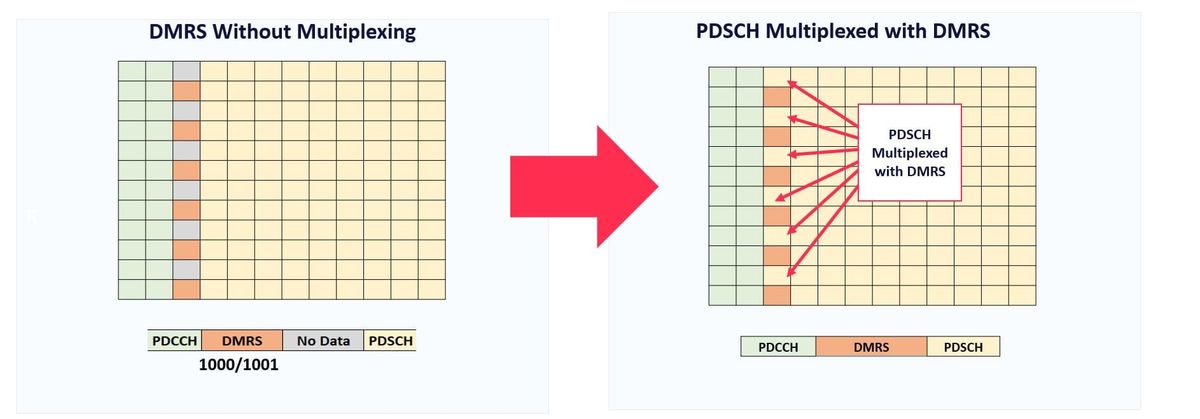
Overview about 5G PDSCH Multiplexing with PDSCH DMRS

💡 What is it?
PDSCH Multiplexing simply means leveraging the free resources within the PDSCH DMRS Symbol for optimal PDSCH utilization.

📈Expected Gain:
Experience an increase in the maximum user throughput for users in good radio conditions.

🚫 Expected Drawbacks:
There's always a tradeoff. Be mindful of the impact on EDGE Users due to the DRMS power boosting. "The free resources power was being used for other RS, which was increasing DMRS power by around 2~3dB"

🚧 Important Note:
PDSCH Multiplexing is a no-go for Rank 3, Rank 4, and MU-MIMO Users, as all 4 ports will be utilized for DMRS.
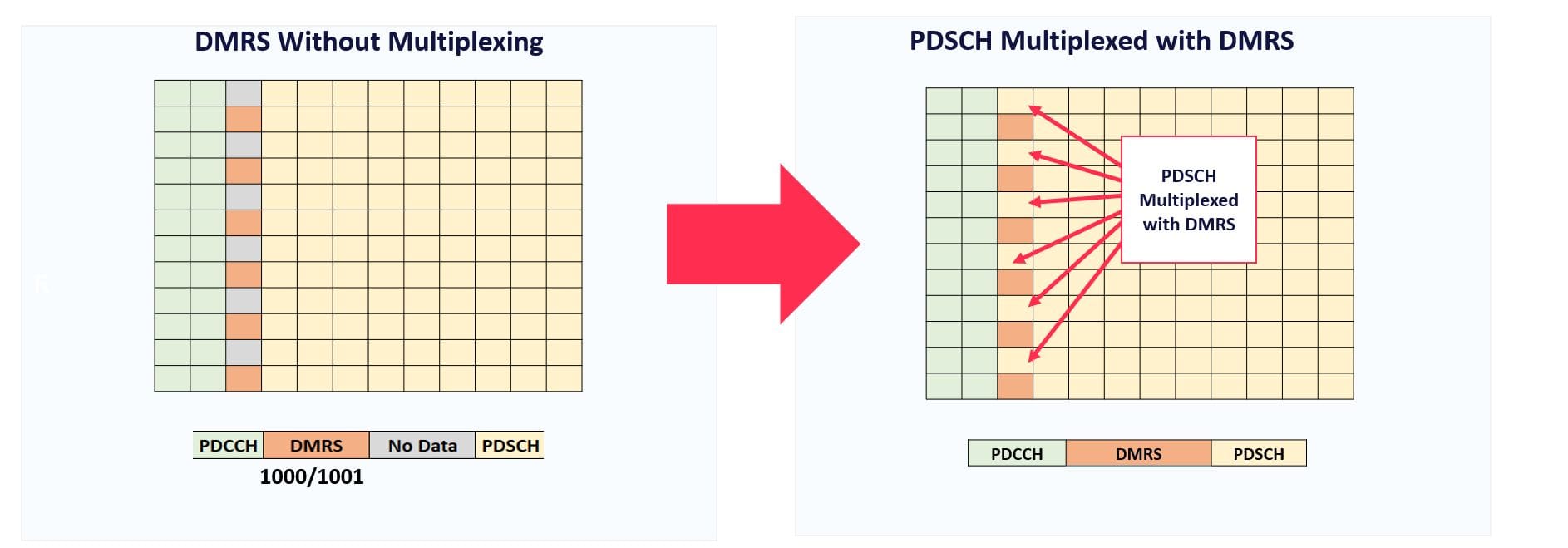
Refer to the below YouTube video for more details:
Read more

5G HARQ Explained: Soft Combining, HARQ Processes, ACK/NACK Timing, Codebook Types, Spatial Bundling, and 4G vs 5G Differences (Article)

5G HARQ Explained: Soft Combining, HARQ Processes, ACK/NACK Timing, Codebook Types, Spatial Bundling, and 4G vs 5G Differences (Article)

Introduction * HARQ is one of the most important reliability mechanisms in the 5G MAC layer. It directly affects retransmission speed, uplink control overhead, latency, and overall scheduling efficiency. * In simple words, HARQ gives 5G a fast retransmission loop. It helps recover transmission errors much faster than higher-layer recovery, which is

By Mohamed ELAdawi